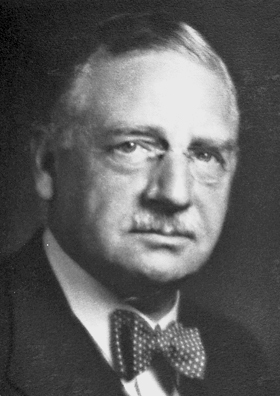
A merchant’s son who loved the humanities
Otto Loewi was born on June 3, 1873, in Frankfurt am Main, Germany, into a Jewish family. His father, Jacob Loewi, was a merchant, and his mother was Anna Willstätter. He attended the classical humanistic Gymnasium in Frankfurt, and from his schooldays his real passions were the humanities rather than the sciences. All his life he loved music, architecture and painting, and as a young man he seldom missed a chance to visit a museum or exhibition.
In 1891 he went to study medicine at the universities of Munich and Strasbourg, then part of Germany. By his own account he was an indifferent medical student. Apart from the inspiring anatomy lectures of Gustav Schwalbe, he rarely attended medical classes, preferring those of the philosophy faculty, and he only just scraped through his first medical examination in 1893. Then, in the autumn of 1894, his indifference suddenly gave way to almost enthusiastic interest.
From the clinic to the laboratory
Loewi took his medical doctorate at Strasbourg in 1896, with a thesis suggested by Oswald Schmiedeberg, the “father of pharmacology.” He studied chemistry in Frankfurt and biochemistry in Strasbourg, and in 1897–98 worked as an assistant to the clinician Carl von Noorden at the Frankfurt City Hospital. What he saw there changed his course. Patients with advanced tuberculosis and pneumonia were dying in great numbers with no effective treatment, and Loewi decided that he could do more good by researching the basic science of how drugs act on the body than by practising medicine.
In 1898 he became assistant to the eminent pharmacologist Hans Horst Meyer at the University of Marburg. His early work was on metabolism; in 1902 he published a paper showing that animals can rebuild their proteins from amino acids, the products of protein breakdown, an important finding for the science of nutrition. That year he also spent several months in Ernest Starling’s laboratory in London, where he met Henry Dale, who would become his lifelong friend and, many years later, the man with whom he shared the Nobel Prize.
Vienna and Graz
In 1905 Loewi followed Meyer to Vienna as an associate professor. There he studied carbohydrate metabolism and, with Alfred Fröhlich, the autonomic nervous system that controls involuntary functions such as heartbeat and digestion. A classic 1905 paper showed that small doses of cocaine strengthen the body’s responses to adrenaline and to stimulation of the sympathetic nerves, a finding that stimulated years of further research. In 1909 he was appointed to the chair of pharmacology at the University of Graz in Austria, where he would spend nearly three decades and become known as an inspiring lecturer who attracted students and collaborators from as far away as the United States.
His interests ranged widely. In Graz he continued to study carbohydrate metabolism, including the conditions behind the rise in blood sugar caused by adrenaline, and among his other studies published influential work on the link between digitalis, the old heart drug, and calcium. He also observed that in dogs whose pancreas had been removed, adrenaline dropped into the eye dilated the pupil, though it had no such effect in normal animals; surgeons later adapted this “Loewi test” as a bedside aid in diagnosing acute pancreatitis.
In 1908 Loewi married Guida Goldschmiedt, daughter of the chemist Guido Goldschmiedt, a professor in Prague and later Vienna. They had three sons, Hans, Victor and Guido, and a daughter, Anna.
The great question: electric or chemical?
At the start of the twentieth century, one of the central puzzles of physiology was how a nerve passes its message on to the organ it controls. Nerves clearly carried electrical impulses, and many scientists assumed the signal simply jumped across the tiny gap, the synapse, as electricity. Others suspected that the nerve endings released chemicals that carried the message across. Drugs were known to mimic the effects of nerve stimulation, but no one had shown that the body itself released such a chemical when a nerve fired. The debate divided even the most eminent scientists of the day. The answer mattered far beyond the laboratory: if nerves worked through chemicals, then their messages could in principle be imitated, amplified or blocked by drugs, opening the way to a rational pharmacology of the nervous system.
An experiment from a dream
Loewi’s answer came, by his own famous account, in his sleep. In 1921, on the night before Easter Sunday, he woke with an idea for an experiment, scribbled notes on a scrap of paper and went back to sleep. In the morning he could not read what he had written. The next night the idea returned; this time he went straight to his laboratory.
The experiment was beautifully simple. Loewi took two beating frog hearts and kept each alive in a salt solution. The first still had its vagus nerve attached; the second did not. When he electrically stimulated the vagus nerve of the first heart, it slowed down, as expected. He then took some of the fluid that had bathed the first heart and applied it to the second. The second heart slowed too. Something dissolved in the fluid, released by the nerve, was carrying the message. Loewi called the unknown chemical Vagusstoff, “vagus substance.”
Over the following years Loewi and his co-workers showed that Vagusstoff was acetylcholine, and that a substance closely related to adrenaline played the corresponding role at the endings of the sympathetic nerves. It was the first demonstration that nerves communicate by releasing chemical messengers, what we now call neurotransmitters.
The Nobel Prize, 1936
Henry Dale, working in London, had independently identified acetylcholine and extended the principle of chemical transmission to other nerves, including those that control muscles. In 1936 Loewi and Dale shared the Nobel Prize in Physiology or Medicine for their discoveries relating to the chemical transmission of nerve impulses. Their work transformed the understanding of the autonomic nervous system and opened a new field of science. On December 12, 1936, Loewi delivered his Nobel lecture in Stockholm, “The Chemical Transmission of Nerve Action” setting out the evidence that had begun with two frog hearts fifteen years earlier.
The practical impact has been immense. Almost every drug that acts on the brain and nerves works by mimicking, blocking or modifying neurotransmitters: medicines for heart conditions and blood pressure, muscle relaxants used in surgery, treatments for myasthenia gravis, Parkinson’s disease and Alzheimer’s disease, and modern antidepressants all build on the principle that Loewi’s two frog hearts first demonstrated.
Arrested by the Nazis
Loewi had taken Austrian citizenship in 1905 and had made his life in Graz. On the night of March 11, 1938, as German troops entered Austria, he was arrested by the Nazis along with two of his sons because he was a Jew. He was held for weeks and was released only after he had been forced to instruct his bank in Stockholm to transfer his Nobel Prize money to a Nazi-controlled bank, and to give up his possessions. He was then forced out of the country.
He reached Britain in September 1938 and went on to a visiting professorship at the Université Libre in Brussels in the first half of 1939. On holiday in England when the Second World War broke out, he did not return to Brussels, and worked for a time at the Nuffield Institute in Oxford. He then accepted a post as research professor of pharmacology at the New York University College of Medicine, arriving in the United States in June 1940. His wife was not permitted to leave Austria until early 1941.
A new life in America
In New York Loewi found a lively scientific community and new inspiration in his contacts with biologists from all over the world. He became an American citizen in 1946. He spent his summers at the Marine Biological Laboratory in Woods Hole, Massachusetts, which remained his summer home for the rest of his life. Honours continued to come to him, including honorary degrees from New York University, Yale, Graz and Frankfurt, the Cameron Prize of the University of Edinburgh in 1944, and election as a Foreign Member of the Royal Society in 1954. Austria, which had expelled him, awarded him its Medal for Science and Art in 1959, and the city of Graz gave him its honorary ring.
His wife Guida died in 1958. Otto Loewi died in New York City on December 25, 1961, at the age of eighty-eight.
Legacy
After his death, his youngest son presented his gold Nobel medal to the Royal Society in London, and in 1983 gave his Nobel diploma to the University of Graz, the institution that had been forced to dismiss him. A bust of Loewi stands at the Marine Biological Laboratory in Woods Hole, with a bronze copy in Graz, where a street is named after him.
Loewi’s story is told to generations of students twice over: as the classic experiment that founded the science of neurotransmission, and as the tale of a scientific idea that arrived in a dream. It is also the story of a Jewish scientist robbed of his prize and his home by Nazism, who rebuilt his life in exile and lived to see his discovery become the foundation of modern neuroscience and pharmacology.
Sources & further reading
Otto Loewi, Biographical, NobelPrize.org · Otto Loewi, Wikipedia · Otto Loewi, Jewish Virtual Library · Researched from the sources above and checked against them. Spotted an error? Tell us.
A life of tikkun olam. This is part of tikkun olam, the Jewish idea of repairing the world, and every one of us can add to it.