- Person
- Otto Loewi
- Lived
- 1873–1961
- Field
- Pharmacology
- From
- German-Austrian-American
The story
At the turn of the twentieth century scientists did not know whether animals needed to eat whole proteins in order to build their own, or whether they could assemble them from smaller pieces. The question was fundamental to understanding diet and nutrition.
Otto Loewi was well placed to tackle it. Born in Frankfurt in 1873 to a Jewish merchant family, he had studied medicine at Munich and Strasbourg, where he took his doctorate in 1896 with a thesis suggested by Oswald Schmiedeberg, often called the father of pharmacology. He then studied analytical chemistry with Martin Freund in Frankfurt and spent a few months in Franz Hofmeister's biochemical institute in Strasbourg. In 1898 he became assistant to the renowned pharmacologist Hans Horst Meyer at the University of Marburg.
During his first years in Marburg Loewi worked on metabolism. Studies of phlorhizin, a substance that causes sugar to appear in the urine, and of nuclein metabolism in people earned him an appointment as a lecturer in 1900. Two years later, in 1902, he published a paper titled On protein synthesis in the animal body. It proved that animals are able to rebuild their proteins from their degradation products, the amino acids.
The same year Loewi began a series of papers on the physiology and pharmacology of the kidney, and he spent some months in Ernest Starling's laboratory in London, where he worked with William Bayliss and first met Henry Dale, his future Nobel partner. The protein paper was only the beginning of a remarkably productive career that later took him to Vienna and Graz and to the discovery of chemical nerve transmission.
The Nobel Foundation's biography of Loewi calls the protein finding an essential discovery with regard to nutrition. It showed that the body can break dietary protein down into amino acids and then use those building blocks to make the proteins it needs. That principle underlies the modern understanding of protein in the diet and of how the body uses the food it digests.
Why it matters
Loewi's finding underpins modern understanding of protein nutrition, including the feeding of patients who cannot eat normally.
About Otto Loewi
Pharmacologist whose 1921 frog-heart experiment, famously conceived in a dream, proved that nerves talk through chemicals, founding the science of neurotransmitters and winning the 1936 Nobel Prize.
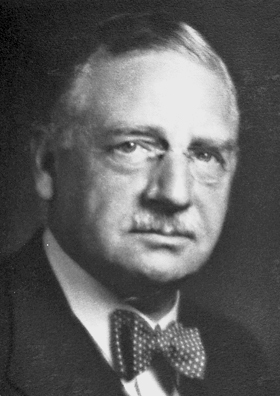
More about Otto Loewi
- Otto Loewi chose research to fight untreatable diseaseAfter watching patients with tuberculosis and pneumonia die for lack of any treatment in 1897–98, Otto Loewi abandoned clinical work to research how drugs act.
- Loewi's 1905 study opened years of nerve researchIn a classic 1905 paper, Otto Loewi and Alfred Fröhlich showed that small doses of cocaine strengthen the body's responses to adrenaline and sympathetic nerves.
- Otto Loewi's dream led to proof that nerves use chemicalsIn 1921 Otto Loewi dreamed up a two-frog-heart experiment that proved, for the first time, that nerves communicate by releasing chemicals.
- Otto Loewi made Graz a magnet for pharmacologistsAs professor of pharmacology at Graz from 1909 to 1938, Otto Loewi became a celebrated lecturer whose associates included researchers from the United States.
- Otto Loewi identified the first neurotransmitterOtto Loewi showed that his 'Vagusstoff' is acetylcholine, the first known neurotransmitter, and that an adrenaline-like substance works at sympathetic nerves.
- Loewi's eye test helped surgeons diagnose pancreatitisOtto Loewi found that adrenaline dilates the pupils of dogs without a pancreas; surgeons adapted this 'Loewi test' to help diagnose acute pancreatitis.
Sources
- Otto Loewi – Biographical NobelPrize.org
- Otto Loewi Wikipedia
Another act of tikkun olam. This is part of tikkun olam, the Jewish idea of repairing the world, and every one of us can add to it.