- Person
- Otto Loewi
- Lived
- 1873–1961
- Field
- Pharmacology
- From
- German-Austrian-American
The story
By 1914 scientists knew that acetylcholine had powerful effects on the body. That year Arthur Ewins, working at Henry Dale's request, extracted it from ergot, and Dale described its actions at various kinds of nerve endings and its ability to lower blood pressure even in tiny doses. But nobody knew whether the body itself used acetylcholine, and the idea of a neurotransmitter did not yet exist.
That changed in 1921, when Otto Loewi's famous experiment in Graz showed that the vagus nerve releases a chemical that slows the heart. He called it Vagusstoff, noted that it seemed to be a structural relative of choline and suspected that it might be acetylcholine. He and his co-workers then set out to identify it.
In 1926 Loewi and E. Navratil deduced that it was probably acetylcholine, because the Vagusstoff and synthetic acetylcholine both lost their activity in the same way when exposed to tissue extracts containing the enzymes now known as cholinesterases. The conclusion was widely accepted, and later studies confirmed it. Over the following years Loewi's work culminated, as the Nobel Foundation puts it, in his demonstration that the parasympathetic substance is acetylcholine and that a substance closely related to adrenaline plays the corresponding role at the endings of the sympathetic nerves.
Acetylcholine thus became the first known neurotransmitter. In 1936 Loewi and Dale shared the Nobel Prize in Physiology or Medicine for their discoveries relating to the chemical transmission of nerve impulses. The Nobel Foundation noted that this and related discoveries led to a complete renewal of ideas about the sympathetic nervous system, which helps control involuntary functions such as heart rate and digestion.
The discovery has had lasting practical value. Drugs that slow the breakdown of acetylcholine, such as neostigmine and pyridostigmine, treat the muscle weakness of myasthenia gravis, and rivastigmine is used for symptoms of Alzheimer's disease. Similar drugs reverse muscle relaxants after surgery, and acetylcholine eye drops are used during cataract operations. Medicines that act on adrenaline signalling, the other half of Loewi's discovery, are widely used for heart and blood pressure conditions.
Why it matters
Drugs acting on acetylcholine and adrenaline signalling now treat conditions from heart disease to myasthenia gravis and are used in anaesthesia.
About Otto Loewi
Pharmacologist whose 1921 frog-heart experiment, famously conceived in a dream, proved that nerves talk through chemicals, founding the science of neurotransmitters and winning the 1936 Nobel Prize.
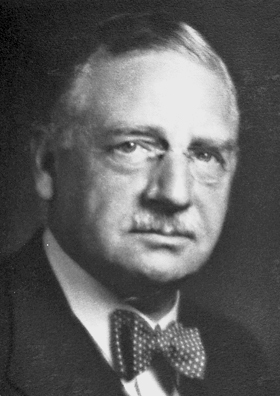
More about Otto Loewi
- Loewi showed animals rebuild proteins from amino acidsIn 1902 Otto Loewi proved that animals can rebuild their own proteins from amino acids, the products of protein breakdown, an essential finding for nutrition science.
- Otto Loewi chose research to fight untreatable diseaseAfter watching patients with tuberculosis and pneumonia die for lack of any treatment in 1897–98, Otto Loewi abandoned clinical work to research how drugs act.
- Loewi's 1905 study opened years of nerve researchIn a classic 1905 paper, Otto Loewi and Alfred Fröhlich showed that small doses of cocaine strengthen the body's responses to adrenaline and sympathetic nerves.
- Otto Loewi's dream led to proof that nerves use chemicalsIn 1921 Otto Loewi dreamed up a two-frog-heart experiment that proved, for the first time, that nerves communicate by releasing chemicals.
- Otto Loewi made Graz a magnet for pharmacologistsAs professor of pharmacology at Graz from 1909 to 1938, Otto Loewi became a celebrated lecturer whose associates included researchers from the United States.
- Loewi's eye test helped surgeons diagnose pancreatitisOtto Loewi found that adrenaline dilates the pupils of dogs without a pancreas; surgeons adapted this 'Loewi test' to help diagnose acute pancreatitis.
Sources
- Acetylcholine Wikipedia
- Otto Loewi – Biographical NobelPrize.org
- Otto Loewi Wikipedia
Another act of tikkun olam. This is part of tikkun olam, the Jewish idea of repairing the world, and every one of us can add to it.