- Person
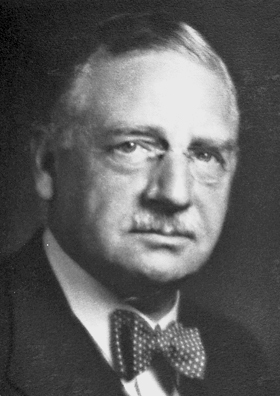
- Otto Loewi
- Lived
- 1873–1961
- Field
- Pharmacology
- From
- German-Austrian-American
The story
Otto Loewi was not a natural medical student at first. After entering the universities of Munich and Strasbourg in 1891, he rarely went to medical lectures, preferring those of the philosophy faculty, and only in 1894 did his indifference give way to real enthusiasm. He took his medical degree at Strasbourg in 1896, studied chemistry with Martin Freund in Frankfurt and worked briefly in Franz Hofmeister's biochemical institute.
In 1897 and 1898 he worked as an assistant to the clinician Carl von Noorden at the City Hospital in Frankfurt. He had intended to become a practising physician. What he saw on the wards changed his mind. Countless patients with far-advanced tuberculosis and pneumonia were dying, left without any treatment because no effective therapy existed. According to the Nobel Foundation's biography, this high mortality led him to drop his plan to become a clinician and instead to pursue research in the basic medical sciences, in particular pharmacology.
In 1898 he became assistant to Hans Horst Meyer, the renowned pharmacologist at Marburg, and followed him to Vienna in 1905. In 1909 he became professor of pharmacology at Graz. He spent the rest of his life studying how the body works and how drugs act on it, from metabolism and kidney function to the autonomic nervous system.
His decision led directly to the discoveries that made him one of the founders of modern pharmacology. In 1921 he proved that nerves communicate by releasing chemicals, and he went on to identify the chemical messenger of the vagus nerve as acetylcholine. He also clarified two mechanisms of great therapeutic importance: how certain drugs block nerve action, and how others strengthen it.
Loewi's research brought him the 1936 Nobel Prize in Physiology or Medicine, shared with Henry Dale, and in 1944 the Cameron Prize for Therapeutics from the University of Edinburgh. The patients he could not help in Frankfurt had no medicines to turn to. The science he chose instead underpins whole classes of drugs that act on nerve signals, used for conditions from heart disease to muscle weakness.
Why it matters
Loewi's choice reflects the conviction that basic research is the path to new treatments, a conviction his own discoveries amply justified.
About Otto Loewi
Pharmacologist whose 1921 frog-heart experiment, famously conceived in a dream, proved that nerves talk through chemicals, founding the science of neurotransmitters and winning the 1936 Nobel Prize.
More about Otto Loewi
- Loewi showed animals rebuild proteins from amino acidsIn 1902 Otto Loewi proved that animals can rebuild their own proteins from amino acids, the products of protein breakdown, an essential finding for nutrition science.
- Loewi's 1905 study opened years of nerve researchIn a classic 1905 paper, Otto Loewi and Alfred Fröhlich showed that small doses of cocaine strengthen the body's responses to adrenaline and sympathetic nerves.
- Otto Loewi's dream led to proof that nerves use chemicalsIn 1921 Otto Loewi dreamed up a two-frog-heart experiment that proved, for the first time, that nerves communicate by releasing chemicals.
- Otto Loewi made Graz a magnet for pharmacologistsAs professor of pharmacology at Graz from 1909 to 1938, Otto Loewi became a celebrated lecturer whose associates included researchers from the United States.
- Otto Loewi identified the first neurotransmitterOtto Loewi showed that his 'Vagusstoff' is acetylcholine, the first known neurotransmitter, and that an adrenaline-like substance works at sympathetic nerves.
- Loewi's eye test helped surgeons diagnose pancreatitisOtto Loewi found that adrenaline dilates the pupils of dogs without a pancreas; surgeons adapted this 'Loewi test' to help diagnose acute pancreatitis.
Sources
- Otto Loewi – Biographical NobelPrize.org
- Otto Loewi Wikipedia
Another act of tikkun olam. This is part of tikkun olam, the Jewish idea of repairing the world, and every one of us can add to it.