- Person
- Otto Loewi
- Lived
- 1873–1961
- Field
- Pharmacology
- From
- German-Austrian-American
The story
Much of Otto Loewi's early research concerned carbohydrate metabolism, and some of it used dogs whose pancreas had been removed, which gives them an experimental form of diabetes. In Vienna after 1905, for example, he showed that such dogs, like dogs deprived of their stored glycogen in other ways, preferred fructose to glucose.
He noticed something curious. Adrenaline dropped into the eye had no effect on the pupils of normal dogs, but in the dogs without a pancreas, the pupil dilated. The change in the eye's response was linked to the loss of the pancreas. Loewi had a lifelong interest in how the autonomic nervous system, which controls the size of the pupil, responds to drugs, and this observation fitted that interest.
Clinicians saw a practical use. The test, known as Loewi's mydriatic test, involved placing repeated drops of a 1 in 1,000 adrenaline solution in the eye and watching for the pupil to widen. Surgeons used it as a diagnostic aid for acute pancreatitis, a dangerous inflammation of the pancreas. In May 1920 the British Medical Journal published a report of two patients: the test was negative in a patient with cancer of the bile duct and positive in a case of pancreatitis, as expected. The surgeon Hamilton Bailey included it in his 1927 textbook Demonstrations of Physical Signs in Clinical Surgery.
Doctors went on to study how reliable it was, including in a 1934 thesis at University College Dublin on the diagnostic value of the test. Its mechanism remained unclear, though one 1943 paper attributed it to a disturbance of the sympathetic nerve fibres that supply the iris.
For surgeons of the time, a simple bedside test using eye drops offered extra evidence in a medical emergency. The mydriatic test remains a striking example of how an observation in the laboratory could quickly find its way to the bedside, and of the breadth of Loewi's research.
Why it matters
Loewi's observation gave doctors of his era a simple bedside test for a serious abdominal emergency.
About Otto Loewi
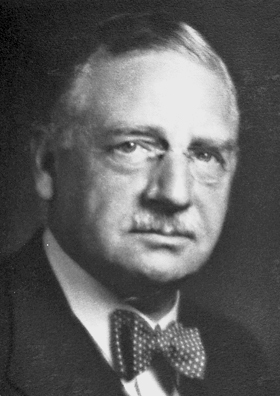
Pharmacologist whose 1921 frog-heart experiment, famously conceived in a dream, proved that nerves talk through chemicals, founding the science of neurotransmitters and winning the 1936 Nobel Prize.
More about Otto Loewi
- Loewi showed animals rebuild proteins from amino acidsIn 1902 Otto Loewi proved that animals can rebuild their own proteins from amino acids, the products of protein breakdown, an essential finding for nutrition science.
- Otto Loewi chose research to fight untreatable diseaseAfter watching patients with tuberculosis and pneumonia die for lack of any treatment in 1897–98, Otto Loewi abandoned clinical work to research how drugs act.
- Loewi's 1905 study opened years of nerve researchIn a classic 1905 paper, Otto Loewi and Alfred Fröhlich showed that small doses of cocaine strengthen the body's responses to adrenaline and sympathetic nerves.
- Otto Loewi's dream led to proof that nerves use chemicalsIn 1921 Otto Loewi dreamed up a two-frog-heart experiment that proved, for the first time, that nerves communicate by releasing chemicals.
- Otto Loewi made Graz a magnet for pharmacologistsAs professor of pharmacology at Graz from 1909 to 1938, Otto Loewi became a celebrated lecturer whose associates included researchers from the United States.
- Otto Loewi identified the first neurotransmitterOtto Loewi showed that his 'Vagusstoff' is acetylcholine, the first known neurotransmitter, and that an adrenaline-like substance works at sympathetic nerves.
Sources
- Otto Loewi Wikipedia
Another act of tikkun olam. This is part of tikkun olam, the Jewish idea of repairing the world, and every one of us can add to it.