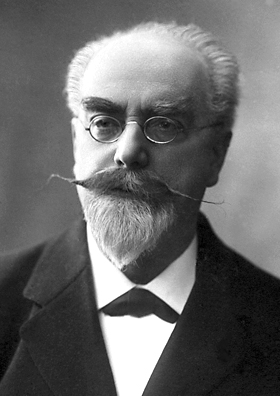
Cholera and plague vaccines
1892–1897The first vaccines against cholera and bubonic plague. Haffkine injected himself first, and millions in India were protected.
57 inventions by 61 Jewish scientists, doctors and engineers. Vaccines that ended epidemics, devices that restart hearts, and the hidden building blocks of every phone, computer and web page. 5 of them were never patented, given freely to the world.
Shots, pills and drugs that turned deadly diseases into manageable ones.
The first vaccines against cholera and bubonic plague. Haffkine injected himself first, and millions in India were protected.
The idea of a “magic bullet” drug that hits a germ and spares the patient. His Salvarsan was the first effective treatment for syphilis.
Purified penicillin and proved it cured infections, turning Fleming’s laboratory curiosity into the first great antibiotic.
 Ernst Chain with Howard Florey
The first successful polio vaccine. Asked who owned the patent, Salk answered: “Could you patent the sun?”
A cheap vaccine given on a sugar cube and never patented. It became the backbone of the global drive to wipe out polio.
Rational drug design: 6-mercaptopurine for childhood leukaemia, azathioprine for organ transplants, allopurinol for gout and acyclovir for herpes.
 Gertrude Elion with George Hitchings
Djerassi’s team made norethindrone, a key oral contraceptive hormone; Pincus led the research that produced the first approved pill.
The RA 27/3 vaccine is the rubella part of MMR shots worldwide and protects unborn babies from birth defects.
Made as a cancer drug that failed; in 1987 it became the first approved treatment for HIV/AIDS.
Found the hepatitis B virus, then a blood test that made transfusions safer and a vaccine credited with preventing countless liver cancers.
Clinical studies showing that a simple salt and sugar drink can treat cholera, a cheap remedy that has saved millions of children.
A way to make unlimited identical antibodies, left unpatented. It underpins diagnostic tests and many of today’s leading drugs.
 César Milstein with Georges Köhler
A hybrid protein that neutralises the inflammatory molecule TNF, now a widely used treatment for rheumatoid arthritis and psoriasis.
The tweak that stopped mRNA from triggering harmful inflammation, making the COVID-19 vaccines given to billions possible.
 Drew Weissman with Katalin Karikó
Tools that keep hearts beating, blood flowing and doctors seeing clearly.
His capillary electrometer, a hair-thin tube of mercury, recorded the first electrocardiogram of a human heart.
Warm and cold water in the ear reveal how each balance organ works, a test doctors still use for patients with vertigo.
Found the safe dose of sodium citrate to stop donated blood clotting, so blood could be collected, stored and given later.
A sodium iodide crystal that detects gamma rays, still the heart of the gamma cameras hospitals use for heart and SPECT scans.
Measures tiny amounts of hormones in blood. Yalow refused to patent it so every lab could use it.
 Rosalyn Yalow with Solomon Berson
A carefully shaped direct-current shock that safely stops a fatal heart rhythm, now in hospitals, ambulances and public places.
A simple way to concentrate clotting factor from frozen plasma, the first practical concentrate for treating hemophilia.
A device small enough to live inside the body that shocks a failing heart back into rhythm. Mirowski was a Holocaust survivor.
His companies brought a rechargeable pacemaker, insulin pumps, cochlear implants and an artificial retina to patients.
Matching systems that let a donor who cannot give to a loved one give to a stranger instead, so both patients get a kidney.
The tools that let us read, cut and rewrite the code of life.
Joined DNA from two different organisms into one molecule for the first time, the founding step of genetic engineering.
A way to copy genes inside bacteria, the technique that launched genetic engineering and the biotech industry.
 Stanley Cohen with Herbert Boyer
One of the two methods that opened the age of genetic sequencing.
 Walter Gilbert with Allan Maxam
Computer-designed proteins never seen in nature, already used in an approved COVID-19 vaccine.
The ideas inside every computer, phone and web page.
His EDVAC report set out the design, program and data in the same memory, behind almost every computer since.
The Logic Theorist proved mathematical theorems by search and helped launch the field of AI.
 Herbert Simon with Allen Newell and Cliff Shaw
Cut messages into small blocks that travel by any route open, a network with no centre. It is how the internet still works.
Cleans errors out of digital signals in mobile phones, satellites and space probes. He chose not to patent it.
His mathematics of data networks guided ARPANET, and his UCLA lab became its first node and sent its first message.
The open set of rules that lets any network in the world join the internet.
 Robert Kahn with Vint Cerf
Two strangers can agree on a secret over an open line. The idea secures nearly every website and payment.
 Martin Hellman with Whitfield Diffie and Ralph Merkle
The S and the A in RSA, the most widely used public-key system, protecting online banking, shopping and messages.

 Adi Shamir & Leonard Adleman with Ron Rivest
The methods inside ZIP files, GIF and PNG images and much of the data compression used today.
 Jacob Ziv with Abraham Lempel
Ranking web pages by the links pointing to them made the web’s information findable for everyone.
Lasers, holograms and the machines that let us see and hear the world in new ways.
Splits a light beam and recombines it to measure distances finer than a wavelength. Giant versions now catch gravitational waves.
An improved telephone transmitter, then the flat disc record and gramophone, the format that carried recorded music for a century.
Captured true colours in a single photographic plate using light interference, a method that won him the 1908 Nobel Prize.
Two physicists designed and patented a silent, safer fridge after reading about a family killed by a leaking one.
A way to record light waves themselves. It now protects banknotes, credit cards and passports.
A superheated liquid in which particles leave trails of bubbles, physicists’ main window on the subatomic world for two decades.
Schawlow, with Charles Townes, set out the laser concept; Maiman built the first working laser with a pink ruby and a flash lamp.
Layered heterostructures that made room-temperature laser diodes possible, now carrying the internet through optical fibre.
A focused laser beam that holds and moves single cells, viruses and strands of DNA, a standard tool in biology labs.
Inventions that feed billions, clean water and connect people.
A neutral, easy-to-learn shared language, created in the hope that people who could talk to each other would stop hating each other.
The synthesis behind the fertilisers that grow the food for about half of humanity.
A scientific way to calculate how much chlorine makes water safe, adopted around the world.
 Abel Wolman with Linn Enslow
Water delivered drop by drop to plant roots, helping millions of farmers grow more food with far less water.
Methods used every day to plan flights, invest savings and measure economies.
The first official estimate of US national income, the groundwork for the measure we now call GDP.
Tables showing how every industry buys from every other, used to trace jobs, prices and supply chains.
Worked out to solve a plywood factory’s puzzle: how to get the most from limited resources.
Finds the best plan among countless options, used by airlines, refineries, power grids and food producers.
The mathematics of diversification, behind how pension funds and savers spread risk.
An auction design that has raised more than $200 billion and put airwaves to work for mobile phones and data.
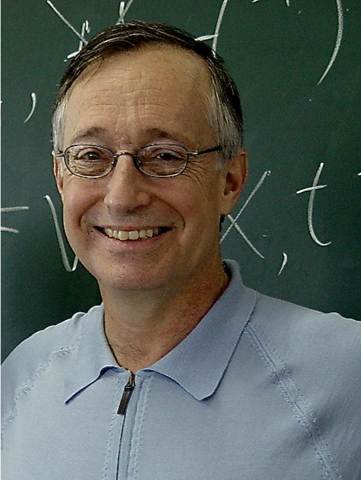 Paul Milgrom with Robert Wilson
No inventions match that search.
Many inventions are team efforts; collaborators are named on each card. Know an inventor who belongs here? Nominate them.