- Person
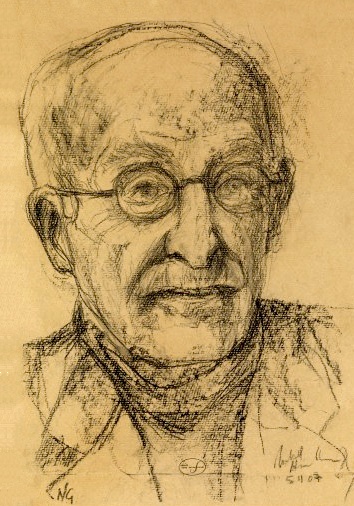
- Norbert Hirschhorn
- Lived
- b. 1938
- Field
- Public health
- From
- Austrian-born American
The story
Norbert Hirschhorn was born in Vienna in 1938 and escaped the Nazis with his parents as a baby, spending the war in London before the family moved to the United States. He studied medicine at Columbia and in 1964 joined the U.S. Public Health Service, which assigned him to the Pakistan-SEATO Cholera Research Laboratory in Dacca, East Pakistan, now Dhaka, Bangladesh.
Cholera kills by dehydration: the intestine pours out water and salts, and a patient can die of shock within hours. Intravenous fluids could save patients, but they required sterile supplies, needles and trained staff that were scarce where cholera was common. Doctors widely doubted that a cholera patient’s gut could absorb enough fluid by mouth.
Hirschhorn’s colleague David Sachar found that the intestine’s ability to absorb sodium survived in cholera and was strongly stimulated by glucose. Within weeks, Hirschhorn led clinical studies showing that a glucose and salt solution given into the intestine could sharply reduce, and sometimes eliminate, the need for intravenous fluids. In water balance studies on patients admitted in shock, he showed that glucose was critical. His 1968 findings, together with work by Nathaniel Pierce, showed that people with severe cholera could absorb enough to stay hydrated. In 1968 David Nalin and Richard Cash showed that patients drinking a matched volume of solution needed 80 percent less intravenous fluid, and in 1971 Dilip Mahalanabis used oral solution to save thousands of refugees in a cholera epidemic.
Hirschhorn later showed on the White River Apache Reservation that children would drink as much solution as they needed and that early refeeding protected their nutrition, helping make ORT a home and village treatment for children. In 1980 the World Health Organization launched a global program for oral rehydration therapy. In 2002 Hirschhorn, Pierce, Mahalanabis and Nalin shared the first Pollin Prize for Pediatric Research for this work. Estimates of the lives saved range from about 40 million to more than 50 million.
Why it matters
Oral rehydration solution, a cheap sachet of salts and sugar mixed with clean water, is used around the world to treat cholera and childhood diarrhea and is on the WHO List of Essential Medicines.
About Norbert Hirschhorn
Vienna-born physician who escaped the Nazis as a baby and became one of the team who proved oral rehydration therapy, a cheap salt and sugar drink credited with saving tens of millions of lives.
Sources
- Norbert Hirschhorn Wikipedia
- The frog skin that saved fifty million lives PubMed Central
- 2019: The Frog Skin that Saved 50 Million Lives Golden Goose Award
- Pollin Prize announcement Cornell Chronicle
- Oral rehydration therapy Wikipedia
Another act of tikkun olam. This is part of tikkun olam, the Jewish idea of repairing the world, and every one of us can add to it.