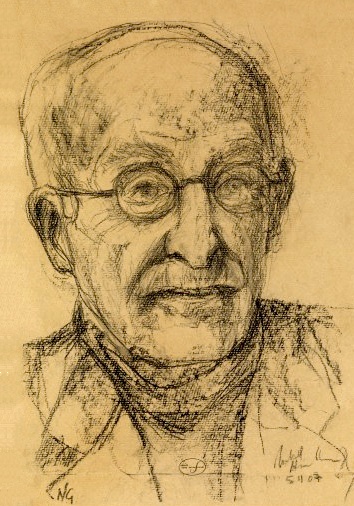
A refugee child
Norbert Hirschhorn was born in Vienna in 1938, the year Nazi Germany annexed Austria and began persecuting its Jews. As a baby he escaped with his parents to London, where the family spent the Second World War before emigrating to the United States. Much later, as a poet, he would describe his work on Yiddish folksongs as a way of tracing his own Jewish cultural history and rescuing his family’s history.
He grew up in New York and attended the Bronx High School of Science, the city’s selective public science school. He graduated from Columbia College in 1958 and received his medical degree from Columbia University’s College of Physicians and Surgeons in 1962. He trained in internal medicine on the Harvard medical services at Boston City Hospital and was certified by the American Board of Internal Medicine in 1970.
Cholera and the problem of dehydration
Cholera kills by draining the body of water and salts. The bacterium causes the intestine to pour out fluid, and a severely ill adult can lose litres in a day. Without treatment, many patients die of dehydration and shock within hours. By the 1960s doctors knew how to save them with intravenous fluids, but intravenous treatment required sterile solutions, needles, trained staff and hospitals, all of which were scarce precisely where cholera and other diarrheal diseases struck hardest.
Scientists had long hoped that patients might simply drink their fluids instead. Earlier attempts had had limited success, and it was widely assumed that a gut in the grip of cholera could not absorb enough. But research in the early 1960s, including Robert Crane’s description of how the intestine absorbs sodium together with glucose, suggested that this absorption might continue even during cholera.
Proof in Dacca
In 1964 Hirschhorn joined the U.S. Public Health Service and was assigned to the Pakistan-SEATO Cholera Research Laboratory in Dacca, East Pakistan, today the International Centre for Diarrhoeal Disease Research in Dhaka, Bangladesh. His younger colleague David Sachar had adapted a method for measuring electrical activity across frog skin to the human intestine, and found that sodium absorption was still working in cholera and was strongly stimulated by glucose. Hirschhorn and Sachar saw at once what this might mean for treatment. The laboratory, opened in 1960 with American and international support, sat in the middle of one of the world’s great cholera zones, where every season brought patients in shock, and it gave young doctors like Hirschhorn the rare chance to test new treatments carefully at the bedside.
Within weeks, Hirschhorn led clinical studies showing that a solution of glucose and salts given into the intestine could sharply reduce, and in some cases eliminate, the need for intravenous fluids. In careful water balance studies on cholera patients admitted in shock, he showed that glucose was critical to reducing stool output. His findings, published in 1968, together with work by Nathaniel Pierce in 1967 and 1968, showed that people with severe cholera could absorb glucose, salt and water in amounts large enough to keep them hydrated.
A team achievement
Oral rehydration therapy, or ORT, was not one person’s invention, and Hirschhorn has been careful to say that it has many claimants. In 1968 David Nalin and Richard Cash, working with Rafiqul Islam and Majid Molla, showed that adults with cholera who drank a glucose and salt solution in volumes matching their losses needed 80 percent less intravenous fluid. In 1971, when war in East Pakistan drove millions of refugees into camps in India and cholera broke out, Dilip Mahalanabis ran out of intravenous fluid and had families give an oral solution instead; more than 3,000 people with cholera were treated this way, and 3.6 percent of them died, compared with 30 percent of those given intravenous fluid in the overwhelmed camps.
In 2002 Hirschhorn, Pierce, Mahalanabis and Nalin shared the first Pollin Prize for Pediatric Research for developing and implementing ORT. Hirschhorn’s part was among the earliest clinical demonstrations that the idea worked in the sickest patients, the step that turned a physiological observation into a treatment.
Bringing it to children
Cholera was the proving ground, but the greatest toll of diarrhea falls on young children. From 1970 to 1973 Hirschhorn taught at Johns Hopkins, and with a grant from the National Institute of Allergy and Infectious Diseases he introduced oral rehydration therapy on the White River Apache Indian Reservation in Arizona. His studies, published in The Lancet in 1972 and the Journal of Pediatrics in 1973, showed that children would voluntarily drink as much of the solution as they needed to restore hydration, and that rehydration combined with early refeeding protected their nutrition.
That finding mattered enormously. Diarrhea was then one of the leading killers of young children worldwide, and in many places a dehydrated child had no realistic access to an intravenous drip. The Apache studies meant that mothers and health workers, not only hospital staff, could treat a child safely at home or in a village clinic, and it led to the wide use of ORT for children around the world. Hirschhorn helped establish the clinical physiology of rehydration in children.
How the world benefits
The principle is simple. Glucose carries sodium with it across the wall of the intestine, and water follows the sodium, so a drink containing the right balance of sugar and salts is absorbed even when the gut is losing fluid. The treatment does not stop the diarrhea; it replaces what is lost until the illness passes. Oral rehydration solution costs very little and can be mixed from a sachet of salts and clean water. The formula has been refined over the years: in 2003 WHO and UNICEF recommended a lower-concentration solution after trials showed it reduced stool volume and the need for intravenous therapy. In 1980 the World Health Organization began a global program to spread it, and it is on the WHO List of Essential Medicines. UNICEF made ORT a pillar of its child survival campaigns. According to a Cornell University announcement of the Pollin Prize, child deaths from acute diarrhea worldwide fell from about 5 million to about 1.3 million a year, and the treatment saved an estimated 40 million lives over three decades. Later estimates, cited by the Golden Goose Award and by Hirschhorn and Sachar themselves, put the total at more than 50 million.
Hirschhorn also helped carry ORT into national health systems. In 1978 he and Joel Lamstein founded John Snow, Inc., a public health consulting firm named after the father of epidemiology. From 1983 to 1991 the firm ran Egypt’s National Control of Diarrheal Diseases Project with the Egyptian health ministry and the U.S. Agency for International Development, a countrywide campaign of manufacturing, training, clinic rehydration corners and television messages that sharply reduced child deaths.
Tobacco, pesticides and public health
Hirschhorn’s later career ranged widely across public health. From 1990 to 1993 he worked with a Food and Agriculture Organization team studying pesticide poisoning among Indonesian farmers. He was a visiting professor at the University of Minnesota and from 1995 to 1998 directed the Division of Family Health at the Minnesota Department of Health. He later taught at Yale, the American University of Beirut and Princeton, and worked at Finland’s National Public Health Institute.
As a consultant to the World Health Organization’s Tobacco-Free Initiative, he studied once-secret tobacco industry documents made public through litigation. His papers, including a study of the German tobacco industry’s hidden research on smoking and health and an analysis of the industry’s approach to second-hand smoke, helped expose how companies had shaped science to protect their products.
Poet and essayist
In retirement Hirschhorn has devoted himself to writing. He has published several collections of poetry and writes book reviews and essays, including studies of the lives and illnesses of nineteenth-century figures such as Abraham Lincoln. He is a member of literary societies in Britain and the United States and lives in Minneapolis, Minnesota. He has three children from his first marriage.
One of his poetry projects returned him to the world his family had fled. For To Sing Away the Darkest Days, he spent five years working through more than a thousand Yiddish folksongs and wrote new English poems inspired by them, which he calls re-imaginings. His publisher describes the collection as telling the story of the emigrant and the Jew in the Diaspora, and Hirschhorn has said that for him it rescues his own family history.
Recognition and legacy
For his work on oral rehydration therapy Hirschhorn received the Charles A. Dana Foundation Award for Pioneering Achievement in Health in 1990, and in 1993 President Bill Clinton honoured him at the White House as an American Health Hero. The 2002 Pollin Prize placed him among the small group of physicians credited with turning ORT into a practical, worldwide treatment.
His legacy is measured in lives that are easy to overlook because they were never lost: children in villages and refugee camps who drank a simple solution instead of dying of dehydration. A refugee child from Vienna, he spent the most important part of his medical career on a treatment designed for the poorest places on earth, and it has become one of the most effective and affordable medical interventions ever developed.
Sources & further reading
Norbert Hirschhorn, Wikipedia · Pollin Prize announcement, Cornell Chronicle · The frog skin that saved fifty million lives, Sachar and Hirschhorn, PubMed Central · 2019: The Frog Skin that Saved 50 Million Lives, Golden Goose Award · To Sing Away the Darkest Days, Holland Park Press · Oral rehydration therapy, Wikipedia · Researched from the sources above and checked against them. Spotted an error? Tell us.
A life of tikkun olam. This is part of tikkun olam, the Jewish idea of repairing the world, and every one of us can add to it.