
For most of history, severe diarrhoea could drain the water from a child's body in a matter of hours, and there was little a parent could do. Today the cure fits in a small packet, costs very little and can be given by a mother at home.
A death sentence, then a drink
Until the late 1960s, the only reliable way to save someone from severe dehydration was to give fluids through a needle into a vein. That meant a hospital, sterile supplies and a trained nurse or doctor, all of which were out of reach for most of the world's poor. Diarrhoeal dehydration killed more than five million children a year, according to the doctors who awarded the first Pollin Prize for Pediatric Research in 2002.
The answer turned out to be astonishingly simple: clean water with the right amounts of salt and sugar, taken by mouth. The World Health Organization now describes oral rehydration solution in exactly those terms, a solution of clean water, sugar and salt, and recommends it as the first treatment for diarrhoea. The Lancet, the British medical journal, called it in 1978 potentially the most important medical advance of the 20th century.
A refugee child becomes a cholera doctor
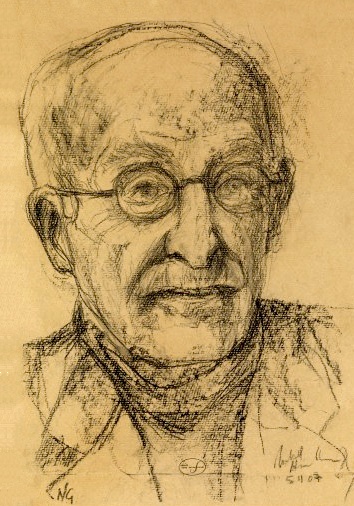
Norbert Hirschhorn was born in Vienna in 1938. As a baby he escaped the Nazi regime with his parents to London, and the family later settled in the United States. He grew up in New York, went to the Bronx High School of Science and studied medicine at Columbia University, graduating in 1962.
In the mid-1960s, after joining the U.S. Public Health Service, he was posted to the Pakistan-SEATO Cholera Research Laboratory in Dacca, East Pakistan, today Dhaka in Bangladesh. The laboratory later became icddr,b, one of the world's leading centres for diarrhoeal disease research. Cholera causes acute watery diarrhoea, and its greatest danger is dehydration, as water and vital salts pour out of the body.
The proof in Dhaka
Scientists already knew that the gut absorbs salt more readily in the presence of glucose, a sugar. The question was whether this still worked in the gut of a person gravely ill with cholera. Working with colleagues at the laboratory, Hirschhorn studied eight cholera patients admitted in shock, giving them glucose and salt solutions through a tube into the gut and carefully measuring what went in and what came out. He showed that glucose was critical to reducing the volume of stool. The results were published in the New England Journal of Medicine in 1968.
At the same time Dr. Nathaniel Pierce and his team in Calcutta ran similar studies. In 1968 two more young American doctors in Dhaka, David Nalin and Richard Cash, working with Bangladeshi colleagues, showed that giving adults an oral solution in amounts matched to their losses cut the need for intravenous fluids by about 80 per cent. Then in 1971 Dr. Dilip Mahalanabis faced a cholera epidemic in crowded refugee camps where intravenous fluid had run out. He had families and carers prepare and give the oral solution themselves. More than 3,000 people were treated this way, and far fewer died than among those who could be given only intravenous fluid.
It took many hands to build the treatment, and the first Pollin Prize in 2002 honoured four of them together: Hirschhorn, Pierce, Nalin and Mahalanabis.
“Potentially the most important medical advance of the 20th century.”The Lancet, on oral rehydration therapy, Quoted by The World (PRX), 2016, and the Council on Foreign Relations, 2019
Children drink what they need
Hirschhorn then took the method to children. In the early 1970s, as a faculty member at Johns Hopkins, he introduced oral rehydration on the White River Apache Indian Reservation. He showed that sick children would voluntarily drink as much of the solution as they needed to restore their fluids, and that rehydrating them and feeding them again early protected their nutrition. The study, published in The Lancet in 1972, helped make the treatment safe and practical for children, who are most at risk from diarrhoea.
He spent much of his career spreading it further. In 1978 he co-founded the public health organisation John Snow, Inc. From 1983 to 1991 it ran Egypt's national programme to control diarrhoeal diseases with the country's health ministry, bringing oral rehydration therapy to the whole country. In 1993 he was honoured at the White House as an American Health Hero.
Mothers as healers
The idea spread fastest when ordinary people learned to use it. From 1980 the Bangladeshi organisation BRAC sent teams door to door to teach mothers to make the drink at home from water, a fistful of sugar and a three-finger pinch of salt. More than 12 million mothers were taught. Packets of oral rehydration salts became a basic part of child health programmes run by UNICEF and the World Health Organization, and they are on the WHO List of Essential Medicines.
The 2002 Pollin Prize announcement estimated that the treatment had saved about 40 million lives in 30 years. A 2019 Council on Foreign Relations event marking 50 years of the work put the figure at more than 50 million in the 20th century alone, and noted that deaths from diarrhoeal diseases had fallen by more than 80 per cent since 1980, in large part because of oral rehydration.
The work still to do
Diarrhoea still kills around 443,000 children under five every year, according to the World Health Organization, and many of those deaths could be prevented with clean water, sanitation and a simple packet of salts and sugar. That is why health workers keep teaching parents the recipe. In 2016 The World reported that UNICEF was distributing some 500 million sachets of the salts to 60 countries every year.
Hirschhorn, who later turned to tobacco control research and then to writing poetry, belongs to a remarkable group of doctors who proved that some of the greatest advances in medicine are also the cheapest. Every time a parent stirs salt and sugar into clean water and helps a child sip, their discovery saves another life.
People in this story
Sources & further reading
- Norbert Hirschhorn, Wikipedia
- First Pollin Prize in pediatric research for development of oral rehydration therapy awarded, Cornell Chronicle
- Decrease in net stool output in cholera during intestinal perfusion with glucose-containing solutions, New England Journal of Medicine (PubMed)
- The Simple Solution That Saved Fifty-Four Million Lives, Council on Foreign Relations
- A simple solution: The history of ORS in Bangladesh, The World (PRX)
- Diarrhoeal disease: fact sheet, World Health Organization
- Oral rehydration therapy, Wikipedia
Researched from the sources above and checked against them. Spotted an error? Tell us.
Tikkun olam in action. This is part of tikkun olam, the Jewish idea of repairing the world, and every one of us can add to it.


