- Person
- Sigmund Freud
- Lived
- 1856–1939
- Field
- Psychology
- From
- Austrian
The story
In October 1885 Sigmund Freud, a young Viennese neurologist, spent three months in Paris studying with Jean-Martin Charcot, who used hypnosis in his research on hysteria. The experience turned Freud toward clinical work, and when he opened his private practice in Vienna in 1886 he began using hypnosis himself.
He was deeply influenced by his friend and colleague Josef Breuer. From 1880 Breuer had treated a young woman, Bertha Pappenheim, known in case studies as Anna O., for symptoms including a persistent cough, visual disturbances and paralysis. Breuer found that when she talked about her symptoms, and recalled the events linked to their first appearance, they eased. She called the treatment the "talking cure", or jokingly "chimney sweeping". Freud and Breuer described the case in Studies on Hysteria in 1895.
Finding hypnosis unreliable, Freud abandoned it and instead encouraged patients to talk freely, without censorship or inhibition, about whatever ideas or memories occurred to them. He called this free association. He also found that patients' dreams could be analysed to reveal hidden material. By 1896 he was calling his new clinical method and the theories behind it psychoanalysis. His patients lay on a couch, now the centrepiece of the Freud Museum in London, while he listened.
Freud adopted the term talking cure to describe the fundamental work of psychoanalysis, and he told the story of Anna O. in his 1909 lectures at Clark University in America. Many later therapies rejected parts of his theory. Cognitive, behavioural and interpersonal approaches emerged and were tested in clinical trials. But all followed him in trying to bring about psychological change by having patients talk about their difficulties, which made his method the basic format for later psychotherapy.
Psychoanalysis remains influential in many schools of therapy and in work with schools, families and groups, and a substantial body of research supports the effectiveness of psychoanalytic and related psychodynamic therapies for a range of psychological disorders. Mental health professionals now use the phrase talking cure for the whole family of talking therapies.
Why it matters
The simple idea that talking with a trained listener can heal underlies modern psychotherapy and counselling, which help millions of people every year.
About Sigmund Freud
Founder of psychoanalysis; reshaped how the world thinks about the mind, the unconscious, and human motivation.
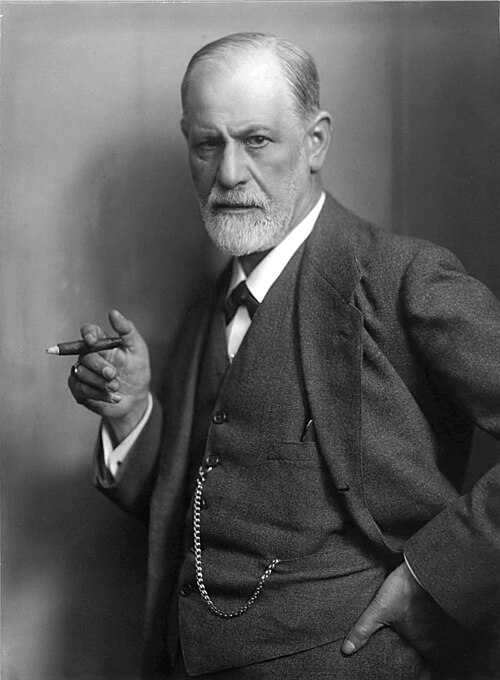
More about Sigmund Freud
- Freud was an early researcher of cerebral palsyAs a neurologist, Sigmund Freud published several papers on cerebral palsy and challenged the prevailing view that it was caused only by lack of oxygen at birth.
- Freud's nerve research helped pave the way to the neuronBefore psychoanalysis, Sigmund Freud spent six years in Ernst Brücke's laboratory studying nerve cells, work that proved seminal for the discovery of the neuron in the 1890s.
- Freud's Interpretation of Dreams opened a new scienceIn The Interpretation of Dreams (1899), Sigmund Freud argued that dreams have meaning and set out his model of the unconscious mind.
- Freud's essay on mourning changed how we understand griefSigmund Freud's 1917 essay “Mourning and Melancholia” distinguished normal grief, painful but inevitable, from depression, laying groundwork for later study of grief and depression.
- Freud coined the medical term agnosiaIn his first book, On Aphasia (1891), Sigmund Freud coined the term agnosia and warned against linking each brain function too rigidly to one location.
- Freud and Einstein debated how to prevent warIn 1932, at the League of Nations' invitation, Sigmund Freud and Albert Einstein exchanged open letters on the causes of war, published in 1933 as Why War?
Sources
- Sigmund Freud Wikipedia
- Talking cure Wikipedia
Another act of tikkun olam. This is part of tikkun olam, the Jewish idea of repairing the world, and every one of us can add to it.