- Person
- Sigmund Freud
- Lived
- 1856–1939
- Field
- Psychology
- From
- Austrian
The story
Sigmund Freud was born in 1856 to a Jewish family in Freiberg, Moravia, and grew up in Vienna. He entered the University of Vienna at 17, in 1873. He had planned to study law but joined the medical faculty, where he also studied philosophy under Franz Brentano and zoology under the Darwinist professor Carl Claus. His first love was laboratory science, and his research interests helped stretch his medical degree to almost nine years.
In 1876 he spent four weeks at Claus's zoological research station in Trieste, dissecting hundreds of eels in an inconclusive search for their male reproductive organs. In 1877 he moved to the physiology laboratory of Ernst Brücke. There he spent six years comparing the nervous systems of humans with those of other animals, including frogs, lampreys and crayfish.
Freud's research on the biology of nervous tissue proved seminal for the later discovery of the neuron, the basic cell of the nervous system, in the 1890s. His work was interrupted in 1879 by a year of compulsory military service, during which he translated four essays by John Stuart Mill.
Freud graduated as a doctor of medicine in March 1881, at 25. In 1882 he began his medical career at Vienna General Hospital, where he worked in several departments, including Theodor Meynert's psychiatric clinic, and continued research on brain anatomy, especially the medulla oblongata. His substantial body of published research led to his appointment in 1885 as a lecturer in neuropathology at the University of Vienna. He went on to publish a book on aphasia in 1891, coining the term agnosia, and to classify forms of cerebral palsy.
A fellowship in Paris with Jean-Martin Charcot in 1885 turned him toward clinical work and eventually to psychoanalysis. His early nerve research is a reminder that the founder of psychoanalysis began as a careful experimental scientist, and it contributed to the foundations of modern neuroscience.
Why it matters
Freud's careful laboratory work contributed to the foundations of modern neuroscience, the study of how nerve cells build the brain.
About Sigmund Freud
Founder of psychoanalysis; reshaped how the world thinks about the mind, the unconscious, and human motivation.
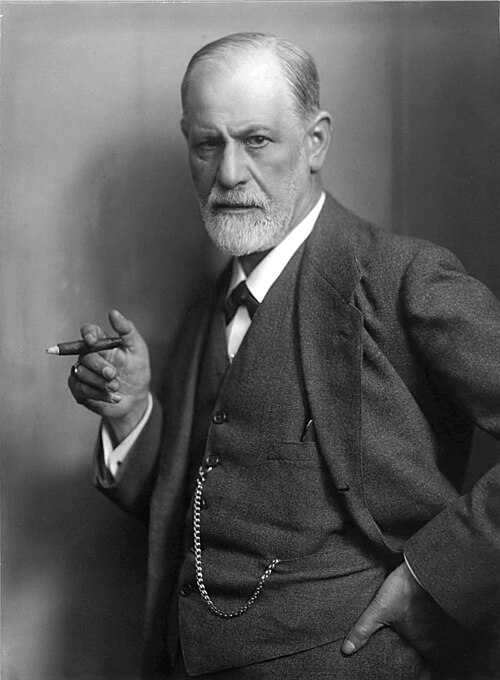
More about Sigmund Freud
- Freud was an early researcher of cerebral palsyAs a neurologist, Sigmund Freud published several papers on cerebral palsy and challenged the prevailing view that it was caused only by lack of oxygen at birth.
- Freud's Interpretation of Dreams opened a new scienceIn The Interpretation of Dreams (1899), Sigmund Freud argued that dreams have meaning and set out his model of the unconscious mind.
- Freud's essay on mourning changed how we understand griefSigmund Freud's 1917 essay “Mourning and Melancholia” distinguished normal grief, painful but inevitable, from depression, laying groundwork for later study of grief and depression.
- Freud coined the medical term agnosiaIn his first book, On Aphasia (1891), Sigmund Freud coined the term agnosia and warned against linking each brain function too rigidly to one location.
- Freud's talking cure became the basis of psychotherapySigmund Freud developed free association, in which patients talk freely about whatever comes to mind. His talking cure set the basic format for all later psychotherapy.
- Freud and Einstein debated how to prevent warIn 1932, at the League of Nations' invitation, Sigmund Freud and Albert Einstein exchanged open letters on the causes of war, published in 1933 as Why War?
Sources
- Sigmund Freud Wikipedia
Another act of tikkun olam. This is part of tikkun olam, the Jewish idea of repairing the world, and every one of us can add to it.