- Person
- Sigmund Freud
- Lived
- 1856–1939
- Field
- Psychology
- From
- Austrian
The story
Long before he became famous for psychoanalysis, Sigmund Freud was a respected neurologist in Vienna. Born in 1856 in Freiberg, Moravia, to a Jewish family, he trained in Ernst Brücke's physiology laboratory, worked at Vienna General Hospital from 1882, studied the anatomy of the brain, and in 1885 became a lecturer in neuropathology at the University of Vienna. After a fellowship in Paris with the neurologist Jean-Martin Charcot, he opened a private practice in 1886 specialising in nervous disorders. Among the conditions he studied was cerebral palsy, then known as cerebral paralysis.
The condition had been described since antiquity, but serious study began only in the nineteenth century. The English surgeon William John Little was the first to study it extensively, and the spastic diplegia form became known as Little's disease. Little argued that it resulted from problems around the time of birth, identifying difficult delivery, premature birth and lack of oxygen during birth as particular risk factors. In the 1880s William Gowers and William Osler built on his work, and many scientists still confused cerebral palsy with polio.
Freud published several medical papers on the condition. He showed that it had existed long before researchers of his own time began to study it. He also questioned Little's view that lack of oxygen during birth was the cause, suggesting instead that complications at birth might be a symptom of an earlier problem rather than its cause.
Freud also refined the classification of the disorder. He divided its causes into problems present before birth, problems that develop during birth and problems after birth. He drew a rough correlation between the location of damage in the brain and the limbs affected, and he documented the many kinds of movement disorder it could produce. His system of classification is still used today.
This work came during the years when Freud was building a substantial record of neurological research, including his 1891 book on aphasia. Cerebral palsy is now known as the most common movement disorder in children, affecting about 2.1 in every 1,000 live births. Freud's careful clinical observations, made before he turned to psychiatry, helped lay the groundwork for how doctors understand and classify it.
Why it matters
Freud's research and classification helped broaden medical understanding of cerebral palsy, the most common movement disorder in children.
About Sigmund Freud
Founder of psychoanalysis; reshaped how the world thinks about the mind, the unconscious, and human motivation.
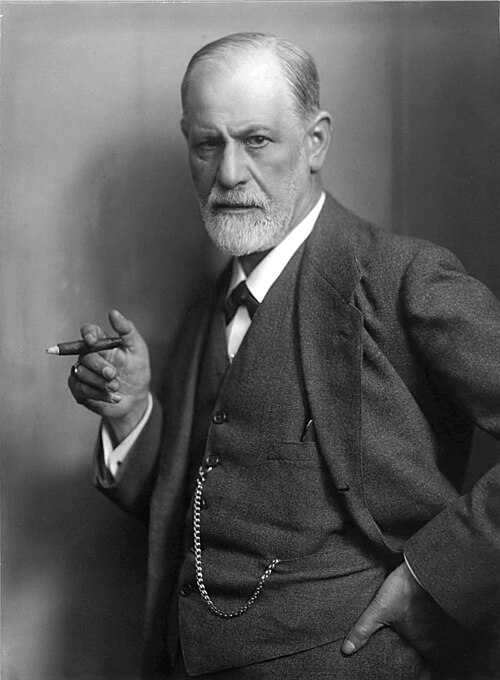
More about Sigmund Freud
- Freud's nerve research helped pave the way to the neuronBefore psychoanalysis, Sigmund Freud spent six years in Ernst Brücke's laboratory studying nerve cells, work that proved seminal for the discovery of the neuron in the 1890s.
- Freud's Interpretation of Dreams opened a new scienceIn The Interpretation of Dreams (1899), Sigmund Freud argued that dreams have meaning and set out his model of the unconscious mind.
- Freud's essay on mourning changed how we understand griefSigmund Freud's 1917 essay “Mourning and Melancholia” distinguished normal grief, painful but inevitable, from depression, laying groundwork for later study of grief and depression.
- Freud coined the medical term agnosiaIn his first book, On Aphasia (1891), Sigmund Freud coined the term agnosia and warned against linking each brain function too rigidly to one location.
- Freud's talking cure became the basis of psychotherapySigmund Freud developed free association, in which patients talk freely about whatever comes to mind. His talking cure set the basic format for all later psychotherapy.
- Freud and Einstein debated how to prevent warIn 1932, at the League of Nations' invitation, Sigmund Freud and Albert Einstein exchanged open letters on the causes of war, published in 1933 as Why War?
Sources
- Sigmund Freud Wikipedia
- Cerebral palsy Wikipedia
Another act of tikkun olam. This is part of tikkun olam, the Jewish idea of repairing the world, and every one of us can add to it.