- Person
- Sigmund Freud
- Lived
- 1856–1939
- Field
- Psychology
- From
- Austrian
The story
In the 1890s Sigmund Freud, a Viennese neurologist, was developing a new method of treating nervous disorders by having patients talk freely about whatever came to mind. He found that their dreams could be analysed to reveal hidden material and the workings of repression. At the same time, after his father's death in 1896, he undertook a self-analysis of his own dreams and childhood memories. Freud knew that the idea that dreams could be interpreted at all put him in opposition to the ruling theories of the day.
Freud traced the book's origins to the summer of 1895, which he spent at Schloss Bellevue near Grinzing. There, on 24 July 1895, he dreamed his famous dream of "Irma's injection", which he analysed as the expression of an unconscious wish. He later joked in a letter that perhaps a marble tablet would one day mark the house where the secret of dreams was revealed; today a memorial plaque with his imagined inscription stands on the site. In December 1897 he presented his ideas in a lecture to the Jewish association B'nai B'rith in Vienna, where it was received enthusiastically.
The Interpretation of Dreams was published at the end of 1899, dated 1900. Freud reviewed existing theories and then gave detailed interpretations of his own and his patients' dreams as wish fulfilments, disguised by what he called the dream-work through processes such as condensation and displacement. He distinguished a dream's remembered manifest content from its latent meaning, and set out a model of the mind divided into the unconscious, the preconscious and the conscious. He called dream interpretation the royal road to a knowledge of the unconscious, and said of the book that such insight falls to one's lot but once in a lifetime.
The first edition of 600 copies took eight years to sell out. But the book's reputation grew. A Russian translation appeared in 1904 and Brill's English edition in 1913, and Freud revised it at least eight times, with seven more editions in his lifetime. He followed it with books that reached a wide readership, including The Psychopathology of Everyday Life, about slips of the tongue and forgetting, and Jokes and their Relation to the Unconscious (1905).
The historian of science I. Bernard Cohen called The Interpretation of Dreams a revolutionary work of science. Later dream researchers have challenged many of its claims, but the book made the unconscious mind a central idea of modern culture.
Why it matters
Freud's book made the unconscious mind a central idea of modern culture and inspired more than a century of debate and research on dreams, memory and the mind.
About Sigmund Freud
Founder of psychoanalysis; reshaped how the world thinks about the mind, the unconscious, and human motivation.
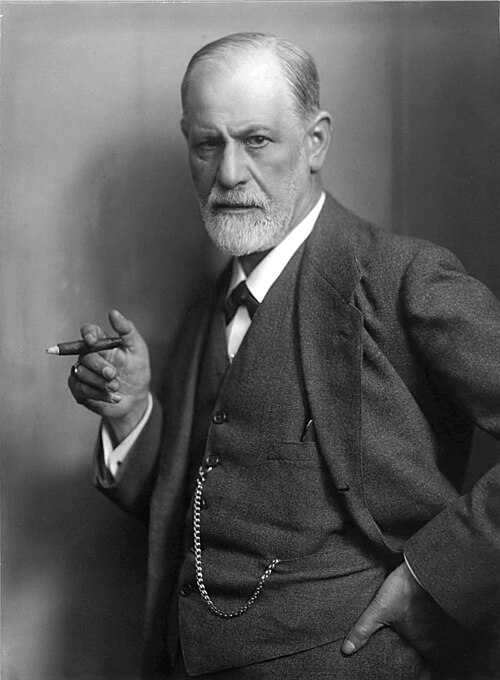
More about Sigmund Freud
- Freud was an early researcher of cerebral palsyAs a neurologist, Sigmund Freud published several papers on cerebral palsy and challenged the prevailing view that it was caused only by lack of oxygen at birth.
- Freud's nerve research helped pave the way to the neuronBefore psychoanalysis, Sigmund Freud spent six years in Ernst Brücke's laboratory studying nerve cells, work that proved seminal for the discovery of the neuron in the 1890s.
- Freud's essay on mourning changed how we understand griefSigmund Freud's 1917 essay “Mourning and Melancholia” distinguished normal grief, painful but inevitable, from depression, laying groundwork for later study of grief and depression.
- Freud coined the medical term agnosiaIn his first book, On Aphasia (1891), Sigmund Freud coined the term agnosia and warned against linking each brain function too rigidly to one location.
- Freud's talking cure became the basis of psychotherapySigmund Freud developed free association, in which patients talk freely about whatever comes to mind. His talking cure set the basic format for all later psychotherapy.
- Freud and Einstein debated how to prevent warIn 1932, at the League of Nations' invitation, Sigmund Freud and Albert Einstein exchanged open letters on the causes of war, published in 1933 as Why War?
Sources
- Sigmund Freud Wikipedia
- The Interpretation of Dreams Wikipedia
Another act of tikkun olam. This is part of tikkun olam, the Jewish idea of repairing the world, and every one of us can add to it.