- Person
- Sigmund Freud
- Lived
- 1856–1939
- Field
- Psychology
- From
- Austrian
The story
By the time of the First World War, Sigmund Freud had spent two decades developing psychoanalysis in Vienna. The war brought loss on an unprecedented scale, as grief touched almost every family in Europe, and Freud turned to the question of what happens in the mind when people lose someone or something they love.
In the essay "Mourning and Melancholia" (Trauer und Melancholie), published in 1917, he compared two responses to loss. Mourning, he argued, is painful but an inevitable and healthy part of life. The mourner knows what has been lost, and over time the mind gradually withdraws its attachment from the lost person, a process that takes place in conscious awareness. Melancholia, his term for what would now be called depression, looks similar but is pathological. The sufferer cannot fully identify what has been lost, so the grief works on in the unconscious mind.
Freud's key insight concerned ambivalence. In melancholia, he suggested, mixed feelings of love and hostility toward the lost person prevent the normal process of letting go. Instead the conflicted feelings turn inward, against the self, which helps explain the harsh self-reproach that often marks depression. He warned that in extreme cases these feelings could lead to suicide.
The essay belongs to a group of papers Freud wrote on the theory of the mind during the war years, and it shaped later psychoanalytic thinking about how people internalise those they have lost. Some writers have since argued that his account of mourning does not match current models of grief.
Still, the essay's central ideas have proved durable: that grief is work the mind must do over time and that depression can involve anger turned against the self. They remain influential in psychiatry and psychotherapy, and in the everyday language people use to talk about loss, more than a century after Freud wrote them.
Why it matters
Freud's essay helped doctors and counsellors understand grief as a natural process and depression as a distinct condition that can be treated.
About Sigmund Freud
Founder of psychoanalysis; reshaped how the world thinks about the mind, the unconscious, and human motivation.
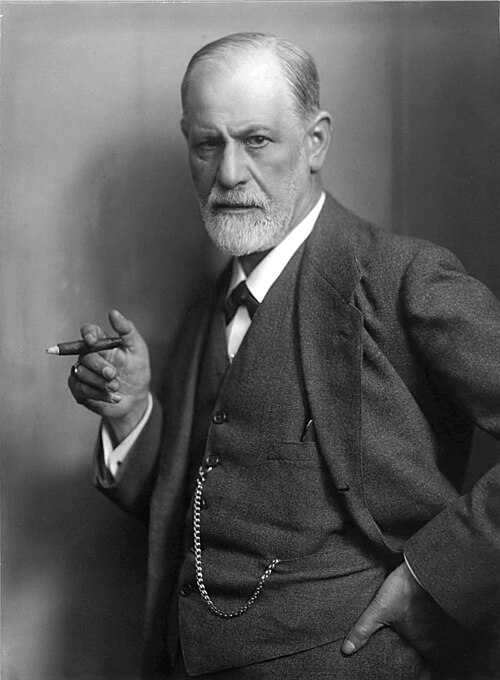
More about Sigmund Freud
- Freud was an early researcher of cerebral palsyAs a neurologist, Sigmund Freud published several papers on cerebral palsy and challenged the prevailing view that it was caused only by lack of oxygen at birth.
- Freud's nerve research helped pave the way to the neuronBefore psychoanalysis, Sigmund Freud spent six years in Ernst Brücke's laboratory studying nerve cells, work that proved seminal for the discovery of the neuron in the 1890s.
- Freud's Interpretation of Dreams opened a new scienceIn The Interpretation of Dreams (1899), Sigmund Freud argued that dreams have meaning and set out his model of the unconscious mind.
- Freud coined the medical term agnosiaIn his first book, On Aphasia (1891), Sigmund Freud coined the term agnosia and warned against linking each brain function too rigidly to one location.
- Freud's talking cure became the basis of psychotherapySigmund Freud developed free association, in which patients talk freely about whatever comes to mind. His talking cure set the basic format for all later psychotherapy.
- Freud and Einstein debated how to prevent warIn 1932, at the League of Nations' invitation, Sigmund Freud and Albert Einstein exchanged open letters on the causes of war, published in 1933 as Why War?
Sources
- Sigmund Freud Wikipedia
- Mourning and Melancholia Wikipedia
Another act of tikkun olam. This is part of tikkun olam, the Jewish idea of repairing the world, and every one of us can add to it.