- Person
- Aaron Copland
- Lived
- 1900–1990
- Field
- Music
- From
- American
The story
When Aaron Copland came home from three years of study in Paris in the mid-1920s, American orchestras played mainly European music and American composers struggled to get a hearing. Copland was determined to live as a full-time composer, but he survived on two Guggenheim Fellowships, lecture-recitals, small commissions and loans. Looking for what he called a usable past, he found few American classical models beyond Charles Ives and Carl Ruggles, and he turned to jazz and popular music for inspiration.
Inspired by the example of Les Six in France, he sought out contemporaries such as Roger Sessions, Roy Harris, Virgil Thomson and Walter Piston, and quickly became a spokesperson for his generation. The group's relationship mixed support and rivalry, and Copland played the key role in keeping them together until after the Second World War. With Sessions he founded the Copland-Sessions Concerts, which presented new chamber works by American composers to fresh audiences. At The New School in New York he also used his teaching post to present a wide range of composers and performers.
Concerts alone could not solve the deeper problem: composers also needed their scores published, distributed and protected. Copland helped form the American Composers Alliance, a nonprofit service organisation to promote and publish American contemporary classical music. Copland's own biographers date this to 1938, while the alliance gives its founding year as 1937, crediting Copland, Milton Adolphus, Marion Bauer and others. Copland served as its president from 1939 to 1945, the same years in which his own ballets, film scores and wartime works were making him the best-known composer in the country.
The alliance has outlasted its founders. It describes itself as the oldest national organisation of its kind and represents more than 200 member composers. It publishes scores under the imprint American Composers Edition, while leaving copyright in the hands of the composers themselves. From 1951 to 2012 it presented the Laurel Leaf Award for distinguished achievement in fostering American music, and from 2001 to 2013 it ran an annual festival of new American works. Membership is open to any composer writing contemporary classical music at a professional level, with no stylistic requirements.
Together these efforts helped create the conditions for an American school of classical music. Composers who might otherwise have remained unknown found performers, publishers and audiences, and Copland earned a reputation as the champion of his whole generation, later summed up in the title Dean of American Music.
Why it matters
The organisations Copland helped build gave American composers a lasting way to get their music performed, published and heard, and the American Composers Alliance still serves composers today.
About Aaron Copland
Composer of "Appalachian Spring" and "Fanfare for the Common Man"; defined the sound of American classical music.
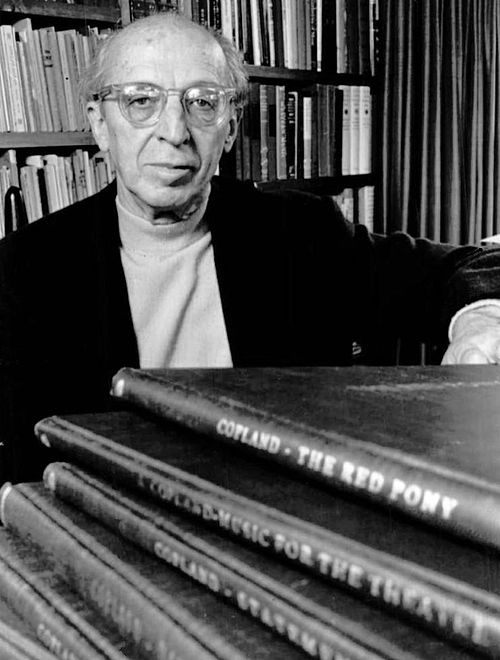
More about Aaron Copland
- Aaron Copland's Billy the Kid created American ballet musicAaron Copland's 1938 ballet Billy the Kid, using six cowboy folk songs, was among the first to display a truly American music and dance vocabulary.
- Aaron Copland wrote America's wartime anthems for everyoneDuring the Second World War Aaron Copland wrote Fanfare for the Common Man and Lincoln Portrait, which both became American patriotic standards.
- Aaron Copland left his fortune to support new musicAaron Copland left much of his large estate to create the Aaron Copland Fund for Composers, which gives more than 600,000 dollars a year to performing groups.
- Aaron Copland helped hundreds of young composersAaron Copland met and helped hundreds of young composers, teaching for many summers at Tanglewood and earning the title Dean of American Music.
- Aaron Copland wrote an opera for schoolchildrenFrom about 1935 Aaron Copland composed music for young performers and audiences, including the piano pieces The Young Pioneers and the children's opera The Second Hurricane.
- Aaron Copland taught the public What to Listen for in MusicAaron Copland's lectures at New York's New School became What to Listen for in Music, a guide for ordinary listeners first published in 1939 and reprinted many times.
Sources
- Aaron Copland Wikipedia
- American Composers Alliance Wikipedia
Another act of tikkun olam. This is part of tikkun olam, the Jewish idea of repairing the world, and every one of us can add to it.