- Person
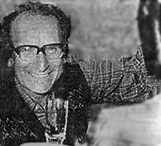
- César Milstein
- Lived
- 1927–2002
- Field
- Immunology
- From
- Argentine-British
The story
In 1975 César Milstein, an Argentine-born Jewish biochemist at the Medical Research Council Laboratory of Molecular Biology in Cambridge, and his postdoctoral fellow Georges Köhler invented a way to make monoclonal antibodies. By fusing antibody-producing cells with cancerous cells that multiply indefinitely, they created hybrid cells that would produce unlimited amounts of a single, identical antibody aimed at one target.
Milstein did not leave others to find uses for the new technique. He set out to show what precise, unlimited supplies of a single antibody could do in biology and medicine, and he contributed many improvements himself, especially in using monoclonal antibodies as markers to tell different types of cells apart.
One fruitful partnership was with the neuroscientist Claudio Cuello. Brain researchers were discovering that many peptides act as chemical messengers between nerve cells, and they relied on antibodies to locate them. But conventional antibodies, taken from immunised animals, could not provide a standardised, permanent supply. In July 1979 Cuello, G. Galfrè and Milstein reported in the Proceedings of the National Academy of Sciences that they had made a monoclonal antibody against substance P, a peptide messenger involved in pain signalling. Their hybrid cells provided a standardised and permanent source of the antibody. It could detect substance P in tiny quantities, did not react with other brain peptides they tested, and, when made fluorescent, picked out nerve endings and cell bodies in clearly defined regions of the central nervous system with remarkably little background.
The work showed that monoclonal antibodies could serve as precise, reproducible probes for mapping the brain. Milstein and Cuello helped lay the foundation for using such antibodies to investigate the disease pathways of neurological disorders and many other conditions, and their work also helped make immune-based diagnostic tests more powerful. These advances took several years to realise their full potential.
In 1984 Milstein shared the Nobel Prize in Physiology or Medicine with Köhler and Niels Jerne. Today monoclonal antibodies are standard tools in neuroscience laboratories and in clinical laboratories, where they underpin many diagnostic tests.
Why it matters
Monoclonal antibodies used as precise probes transformed the study of the brain and made many diagnostic tests more sensitive and reliable.
About César Milstein
Argentine-born son of a Jewish immigrant who co-invented monoclonal antibodies in Cambridge in 1975, a technique left unpatented that now underpins diagnostics and drugs.
More about César Milstein
- César Milstein found the signal on newly made antibodiesStudying the messenger RNA that encodes antibodies, César Milstein provided the first evidence that secreted antibody chains are first made with a signal sequence.
- César Milstein foresaw antibody medicinesCésar Milstein foresaw that combining monoclonal antibodies with recombinant DNA technology could create new reagents, and he inspired the antibody engineering behind today's antibody drugs.
- César Milstein co-invented monoclonal antibodiesIn 1975 César Milstein and Georges Köhler invented a way to make monoclonal antibodies, a technique that now underpins countless tests and treatments.
- César Milstein showed how antibodies get betterCésar Milstein demonstrated the importance of somatic hypermutation, the process by which antibody genes mutate during an infection to produce ever more effective antibodies.
Sources
- César Milstein Wikipedia
- Detection of substance P in the central nervous system by a monoclonal antibody PNAS (via PubMed)
Another act of tikkun olam. This is part of tikkun olam, the Jewish idea of repairing the world, and every one of us can add to it.