- Person
- César Milstein
- Lived
- 1927–2002
- Field
- Immunology
- From
- Argentine-British
The story
In 1975 César Milstein and Georges Köhler, working at the Medical Research Council Laboratory of Molecular Biology in Cambridge, invented the hybridoma technique for making monoclonal antibodies: unlimited supplies of a single antibody aimed at one precise target. Milstein, an Argentine-born Jewish biochemist who had spent his career studying how antibodies are built and how their diversity arises, quickly saw that the invention was only a beginning.
The first monoclonal antibodies were made in mice. Mouse and human antibodies are similar, but when mouse antibodies were injected into people the differences were enough to provoke an immune response. The antibodies were quickly removed from the blood, could cause inflammation and led patients to make human anti-mouse antibodies. That limited their use as medicines.
Milstein foresaw the wealth of molecules that could result from applying recombinant DNA technology, the new tools of genetic engineering, to monoclonal antibodies. He acted as a guide and inspiration to many in the antibody field and helped inspire the development of antibody engineering, which went on to produce safer and more powerful antibodies for treating disease.
In 1988 Gregory Winter and his team developed techniques to humanise monoclonal antibodies. In one approach, mouse DNA encoding the binding portion of an antibody was merged with human antibody DNA, producing part-mouse, part-human chimeric or humanised antibodies that the body was far less likely to reject. Scientists later developed fully human antibodies using transgenic mice and phage display, in which vast libraries of antibody fragments are displayed on viruses so that the best binders can be selected.
The results have reshaped medicine. Engineered monoclonal antibodies include trastuzumab, used for breast cancers that overproduce the HER2 receptor, and drugs that block the PD-1 receptor to unleash the immune system against cancer, an approach recognised by the 2018 Nobel Prize awarded to James Allison and Tasuku Honjo. Many more treat autoimmune and inflammatory diseases. Milstein shared the 1984 Nobel Prize with Köhler and Niels Jerne. He died in 2002.
Why it matters
Antibody engineering, which Milstein helped inspire, has produced some of the most effective modern treatments for cancer and autoimmune disease.
About César Milstein
Argentine-born son of a Jewish immigrant who co-invented monoclonal antibodies in Cambridge in 1975, a technique left unpatented that now underpins diagnostics and drugs.
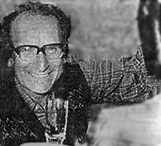
More about César Milstein
- César Milstein turned antibodies on the nervous systemWith Claudio Cuello, César Milstein used a monoclonal antibody in 1979 to detect substance P in the nervous system, laying foundations for studying neurological disease.
- César Milstein found the signal on newly made antibodiesStudying the messenger RNA that encodes antibodies, César Milstein provided the first evidence that secreted antibody chains are first made with a signal sequence.
- César Milstein co-invented monoclonal antibodiesIn 1975 César Milstein and Georges Köhler invented a way to make monoclonal antibodies, a technique that now underpins countless tests and treatments.
- César Milstein showed how antibodies get betterCésar Milstein demonstrated the importance of somatic hypermutation, the process by which antibody genes mutate during an infection to produce ever more effective antibodies.
Sources
- César Milstein Wikipedia
- Monoclonal antibody Wikipedia
Another act of tikkun olam. This is part of tikkun olam, the Jewish idea of repairing the world, and every one of us can add to it.