- Person
- César Milstein
- Lived
- 1927–2002
- Field
- Immunology
- From
- Argentine-British
The story
When the body first meets an invader, its antibodies may bind only weakly. Over the following weeks they improve, a process called affinity maturation. How that happens was one of the deep questions that drew César Milstein, the Argentine-born Jewish biochemist, to immunology after he joined the Medical Research Council Laboratory of Molecular Biology in Cambridge in 1963. The major part of his career was devoted to understanding how antibodies are built and how their enormous diversity is generated.
His 1975 invention with Georges Köhler of monoclonal antibodies, for which they shared the 1984 Nobel Prize with Niels Jerne, gave him a powerful tool for the task. Each hybridoma produces a single antibody that can be studied in detail. Combining hybridoma technology with new methods of reading DNA and RNA sequences, Milstein charted the changes that occur in antibodies after they encounter their target.
He demonstrated the importance of somatic hypermutation of immunoglobulin V genes, the genes for the variable regions that form the antibody's binding site. When a B cell recognises an invader it begins to divide, and the genes for its antibody mutate at a rate many times higher than the rest of the genome. The changes cluster in the parts of the antibody that touch the target. Out of thousands of slightly different cells, those whose antibodies bind best are selected to become antibody-producing plasma cells and long-lived memory cells.
Localised mutation of the antibody genes therefore allows the immune system to produce improved antibodies, and it makes a major contribution to protective immunity and to immunological memory. Because these mutations happen only in immune cells, they are not passed on to children.
Much of Milstein's work in his later years was devoted to understanding the mechanism of this mutational process. Scientists have since found that an enzyme called activation-induced cytidine deaminase starts the process by altering bases in the DNA. Milstein remained at the bench until the end, submitting a manuscript on the subject for publication less than a week before he died in Cambridge in March 2002.
Why it matters
Understanding how antibodies improve helps explain how vaccines build lasting protection and guides scientists designing better antibodies for medicine.
About César Milstein
Argentine-born son of a Jewish immigrant who co-invented monoclonal antibodies in Cambridge in 1975, a technique left unpatented that now underpins diagnostics and drugs.
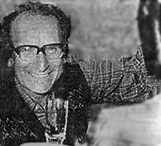
More about César Milstein
- César Milstein turned antibodies on the nervous systemWith Claudio Cuello, César Milstein used a monoclonal antibody in 1979 to detect substance P in the nervous system, laying foundations for studying neurological disease.
- César Milstein found the signal on newly made antibodiesStudying the messenger RNA that encodes antibodies, César Milstein provided the first evidence that secreted antibody chains are first made with a signal sequence.
- César Milstein foresaw antibody medicinesCésar Milstein foresaw that combining monoclonal antibodies with recombinant DNA technology could create new reagents, and he inspired the antibody engineering behind today's antibody drugs.
- César Milstein co-invented monoclonal antibodiesIn 1975 César Milstein and Georges Köhler invented a way to make monoclonal antibodies, a technique that now underpins countless tests and treatments.
Sources
- César Milstein Wikipedia
- Somatic hypermutation Wikipedia
Another act of tikkun olam. This is part of tikkun olam, the Jewish idea of repairing the world, and every one of us can add to it.