- Person
- César Milstein
- Lived
- 1927–2002
- Field
- Immunology
- From
- Argentine-British
The story
César Milstein was born in 1927 in Bahía Blanca, Argentina, the son of a Jewish immigrant from Ukraine. He trained in chemistry at the University of Buenos Aires and earned a first doctorate there on enzyme kinetics, then won a British Council fellowship to Cambridge, where he completed a PhD under Malcolm Dixon on the enzyme phosphoglucomutase and began working with Fred Sanger. After returning to Argentina, he was forced to resign in 1963 when political persecution of liberal scientists turned against the director of his institute.
He returned to Cambridge to rejoin Sanger, who now headed the Division of Protein Chemistry at the Medical Research Council's newly formed Laboratory of Molecular Biology. At Sanger's suggestion he turned from enzymes to antibodies. The central puzzle was how the immune system produces an almost limitless variety of these proteins.
Milstein's early work examined antibody diversity at the level of amino acids and the disulphide bonds that hold antibody chains together, part of it in collaboration with his wife, Celia, a biochemist. He then moved to studying the messenger RNA that carries the instructions for making antibodies. In 1972, with G. G. Brownlee, T. M. Harrison and M. B. Mathews, he published a paper in Nature New Biology describing a possible precursor of immunoglobulin light chains. It provided the first evidence that secreted antibody chains are made with an extra stretch at their front end, a signal sequence that is later removed.
Other researchers built on the finding. In 1975 Günter Blobel and Bernhard Dobberstein, also working with antibody light chains from mouse myeloma cells, described how such chains are processed as they cross cell membranes. Signal sequences turned out to be a general mechanism: a short tag, usually 16 to 30 amino acids long, at the start of most newly made proteins destined for secretion or for membranes. It directs the protein into the cell's secretory pathway and is then cut off.
Milstein's finding was an early piece of evidence for one of the basic rules of cell biology. Three years later his antibody research led, with Georges Köhler, to monoclonal antibodies, for which he shared the 1984 Nobel Prize in Physiology or Medicine.
Why it matters
Understanding how cells label proteins for export underpins much of modern biotechnology, including the production of protein medicines in cultured cells.
About César Milstein
Argentine-born son of a Jewish immigrant who co-invented monoclonal antibodies in Cambridge in 1975, a technique left unpatented that now underpins diagnostics and drugs.
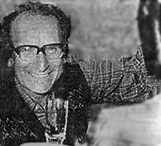
More about César Milstein
- César Milstein turned antibodies on the nervous systemWith Claudio Cuello, César Milstein used a monoclonal antibody in 1979 to detect substance P in the nervous system, laying foundations for studying neurological disease.
- César Milstein foresaw antibody medicinesCésar Milstein foresaw that combining monoclonal antibodies with recombinant DNA technology could create new reagents, and he inspired the antibody engineering behind today's antibody drugs.
- César Milstein co-invented monoclonal antibodiesIn 1975 César Milstein and Georges Köhler invented a way to make monoclonal antibodies, a technique that now underpins countless tests and treatments.
- César Milstein showed how antibodies get betterCésar Milstein demonstrated the importance of somatic hypermutation, the process by which antibody genes mutate during an infection to produce ever more effective antibodies.
Sources
- César Milstein Wikipedia
- César Milstein: Biographical NobelPrize.org
- A possible precursor of immunoglobulin light chains Nature New Biology (via PubMed)
Another act of tikkun olam. This is part of tikkun olam, the Jewish idea of repairing the world, and every one of us can add to it.