- Person
- George de Hevesy
- Lived
- 1885–1966
- Field
- Radiochemistry
- From
- Hungarian
The story
George de Hevesy was born in Budapest in 1885 into a wealthy family of Hungarian-Jewish descent; his grandparents on both sides had led the Jewish community of Pest. He studied in Budapest, Berlin and Freiburg, where he earned his doctorate in 1908, and spent time in Fritz Haber's laboratory in Karlsruhe. In 1910 he went to study radioactivity under Ernest Rutherford in Manchester, where he also met Niels Bohr and where his work concerned radium and lead isotopes.
Work with radioactive substances taught him that a radioactive isotope of an element behaves chemically exactly like the ordinary, stable element. That suggested an idea. If a tiny amount of the radioactive form is mixed in, it can be followed by its radiation, revealing where the element goes and how it reacts. Because radioactive decay releases far more energy than any chemical reaction, even a very low concentration of the labelled atoms can be picked up by sensitive radiation detectors.
Early in 1913 he interrupted his studies in Manchester to work with Friedrich Paneth at the Vienna Institute for Radium Research. Together they carried out the first radioactive-tracer experiment. During his stay in Vienna he also qualified to lecture at the University of Budapest, and in 1915 he was drafted into the Austro-Hungarian army.
The method allowed scientists to watch particular kinds of atoms at work without disturbing the processes they were studying. De Hevesy spent much of the rest of his career extending it. In 1923 he used radioactive lead to trace how broad bean plants take up lead, the first use of a tracer in biology. Later he helped bring isotopes into clinical medicine, and once artificial radioisotopes became available in the 1930s he applied them to plant and animal physiology.
In 1943 he was awarded the Nobel Prize in Chemistry for his work on the use of isotopes as tracers in the study of chemical processes. Medical scientists have called him the father of nuclear medicine, and in 2005 a Danish isotope laboratory was named after him as the father of the tracer principle.
Why it matters
The radioactive tracer became one of the most widely used methods in chemistry, biology and medicine, and a cornerstone of nuclear medicine.
About George de Hevesy
Hungarian chemist of Jewish origin who invented radioactive tracers, co-discovered hafnium, hid two Nobel medals from the Nazis in acid, and won the 1943 Nobel Prize in Chemistry.
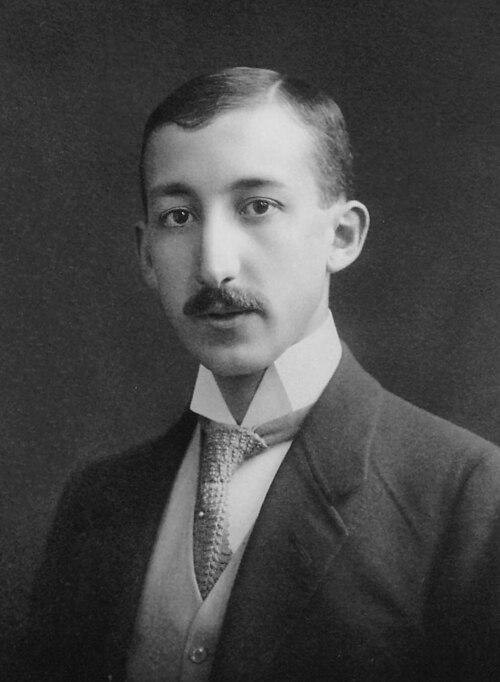
More about George de Hevesy
- George de Hevesy traced lead through a bean plantIn 1923 George de Hevesy published the first use of a radioactive tracer in a living organism, following lead-212 through the roots, stems and leaves of broad beans.
- George de Hevesy co-discovered the element hafniumGuided by Niels Bohr's atomic theory, George de Hevesy and Dirk Coster found the missing element 72 in Copenhagen and named it hafnium, after the city's Latin name.
- George de Hevesy hid colleagues' Nobel medals in acidWhen the Nazis invaded Denmark, chemist George de Hevesy dissolved two colleagues' gold Nobel medals in acid to protect them; after the war the gold was recovered and the medals recast.
- George de Hevesy used isotopes to study cancerAfter fleeing to Sweden in 1943, George de Hevesy used labelled atoms to study how X-rays affect nucleic acids in tumours and how iron moves in healthy and cancerous tissue.
- George de Hevesy invented neutron activation analysisIn 1936 George de Hevesy invented neutron activation analysis, identifying tiny traces of elements by bombarding a sample with neutrons and measuring the radioactivity produced.
- George de Hevesy developed X-ray fluorescence analysisWith Rockefeller Foundation support, George de Hevesy developed X-ray fluorescence analysis, a way to identify the elements in a sample from the X-rays they emit.
Sources
- George de Hevesy: Biographical NobelPrize.org
- George de Hevesy Wikipedia
- Radioactive tracer Wikipedia
Another act of tikkun olam. This is part of tikkun olam, the Jewish idea of repairing the world, and every one of us can add to it.