- Person
- Henri Bergson
- Lived
- 1859–1941
- Field
- Philosophy
- From
- French
The story
Henri Bergson spent years of research preparing each of his major books. After his doctoral thesis on time and freedom, he set out to tackle one of philosophy's oldest questions, the relation between body and mind. His second book, Matière et mémoire (Matter and Memory), published in 1896 with the subtitle Essay on the Relation of Body to Spirit, was among the most demanding.
The book was written partly in response to the psychologist Théodule Ribot, whose 1881 work The Maladies of Memory claimed that brain science showed memory to be lodged in particular parts of the nervous system. Bergson disagreed. He investigated the function of the brain and analysed perception and memory, and according to Wikipedia the book shows a thorough acquaintance with the extensive medical studies of brain disorders carried out at the time. For Bergson, the brain's role is practical: it selects the memories that are useful for present action. Brain damage can disturb that function without erasing memory itself.
He distinguished two kinds of memory. Habit memory, like a poem learned by heart through repetition, lives in the body and serves action. Pure memory, like remembering the particular day the poem was learned, preserves the past as past. In a later preface Bergson called the book "frankly dualistic", because it affirms the reality of both matter and spirit, while aiming to overcome the difficulties that had always beset dualism.
The Stanford Encyclopedia of Philosophy notes that his work foreshadowed a growing interest in the role of unconscious memories in recognition, which led to his election as president of the London-based Society for Psychical Research in 1913. In 1898, two years after the book appeared, Bergson returned to his alma mater, the École Normale Supérieure, as a lecturer and then professor, and its success helped lead to his election to the Collège de France in 1900.
Matter and Memory has attracted renewed attention since the philosopher Gilles Deleuze drew on it in his influential books on cinema. Some researchers in cognitive science have found parallels in modern theories of memory, and a project led by the Japanese philosopher Yasushi Hirai has even drawn on Bergson's ideas in designing artificial neural networks.
Why it matters
Matter and Memory opened new ways of thinking about how memory and perception work, and it remains one of Bergson's major works.
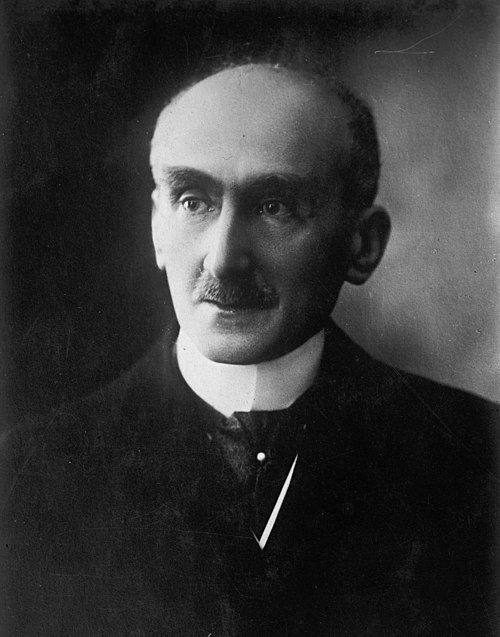
About Henri Bergson
French philosopher of time, memory and the élan vital who won the 1927 Nobel Prize in Literature and, drawn to Catholicism, chose to remain among the persecuted Jews.
More about Henri Bergson
- Henri Bergson wrote a classic essay on why we laughIn Laughter (1900), Henri Bergson argued that comedy arises from "something mechanical encrusted on the living" and that laughter helps make social life possible.
- Henri Bergson, Nobel philosopher who stood with his peopleHenri Bergson won the 1927 Nobel Prize in Literature for his ideas on time and creativity, and later declined to convert so as not to leave the persecuted Jews of Europe.
- Bergson's first book redefined how we think about timeIn Time and Free Will (1889), Henri Bergson distinguished lived time, or duration, from clock time; Louis de Broglie said it anticipated ideas of Bohr and Heisenberg.
- Bergson's last book called for an open, universal moralityIn The Two Sources of Morality and Religion (1932), Henri Bergson contrasted a closed morality of the group with an open morality of love for all.
Sources
- Henri Bergson Wikipedia
- Henri Bergson Stanford Encyclopedia of Philosophy
- Matter and Memory Wikipedia
Another act of tikkun olam. This is part of tikkun olam, the Jewish idea of repairing the world, and every one of us can add to it.