
Israeli inhaled therapy cuts deaths from acute respiratory distress in a controlled trial
Nano24's EXO-CD24, born at Tel Aviv Sourasky Medical Center, kept 85% of ARDS patients free of respiratory failure at day 7, against 33% on placebo, and lowered deaths.
Read the story →
John Paulson gives $250 million to Hebrew University for engineering, medicine and trauma
The largest gift in the university's history will build a new engineering faculty, expand biomedical research and medical training, and fund work on recovery from trauma.
Read the story →
Ben-Gurion University designs a cheap, fridge-free blood probe for rheumatic heart disease
Prof. Ayelet David's light-emitting polymer detects inflammation markers without antibodies or cold storage, aiming at a disease that kills hundreds of thousands in poor countries.
Read the story →
Helmsley Trust gives $3 million for a new science building at Galilee's Tel-Hai University
The grant will help build labs for about 20 research teams at Israel's newest university, the only one north of Haifa, lifting Helmsley's support for the school past $18 million.
Read the story →Repair the World reaches one million acts of Jewish service, four years ahead of schedule
The national Jewish volunteering nonprofit set a 2030 target in 2019. It marked the milestone in Atlanta with service projects for young people experiencing homelessness.
Read the story →Lavin family gives $30 million for a new way to train doctors at Hebrew University
The Center for Advanced Medical Education will use simulation, coaching and AI tools to double the number of physicians Israel can train without lowering standards.
Read the story →
Weizmann study of 300 million lab tests finds menopause reshapes the body abruptly
Uri Alon's team found sudden shifts in 52 of 90 routine blood measures around the final period, with hormonal changes starting over a decade earlier than thought.
Read the story →Whitney opens first New York retrospective of Roy Lichtenstein in over 30 years
'Roy Lichtenstein: Like New' surveys six decades of the Pop pioneer's work and presents him as a prophet of today's copy-and-repost image culture.
Read the story →
Holocaust survivor Henri Kagan, 95, wins the Nobel Prize in Chemistry
The French chemist, who hid from the Nazis as a child, shares the prize with Kenso Soai for showing how molecules of a single 'handedness' can emerge and multiply.
Read the story →Zuckerberg and Chan's Biohub assembles $1.8 billion push to build an AI 'virtual cell'
Federal agencies and tech companies join the Biohub's Virtual Biology Initiative, which aims to generate the open data needed to simulate human cells with AI.
Read the story →Hebrew University scientists test a malnutrition treatment made from locally grown crops
A chickpea, sorghum, maize and soy paste outperformed the standard peanut-and-milk formula in animal tests, pointing to cheaper treatment for starving children.
Read the story →
The Met's 'Past Continuous' presents Lee Krasner as Pollock's equal, not his footnote
More than 120 works, most of them by Krasner, trace the Brooklyn-born daughter of Jewish immigrants and her husband side by side in the Met's first show devoted to either artist.
Read the story →
Esther Rantzen, broadcaster who founded Childline and The Silver Line, dies at 86
The That's Life! presenter used television fame to build two national helplines, one for children in danger and one for lonely older people.
Read the story →FDA clears Israeli app that fine-tunes insulin doses for people with type 2 diabetes
DreaMed Diabetes, spun out of Schneider Children's Medical Center, won US clearance for MODI, which adjusts insulin injections from glucose data between doctor visits.
Read the story →Computer-designed immune receptor makes engineered T cells better cancer killers
Bar-Ilan and Weizmann scientists redesigned the T-cell receptor so it pairs more stably, boosting attacks on tumors and viruses in lab and mouse tests.
Read the story →Ben-Gurion University team finds a molecular switch that helps tumors survive chemotherapy
Two 'guardian' proteins keep stressed cancer cells alive; when they break apart the cells self-destruct, pointing to new ways to beat drug resistance.
Read the story →
Bloomberg Philanthropies expands free school eye care to seven more US cities
An $8.4 million commitment with Vision To Learn will offer free screenings, eye exams and glasses to up to 50,000 children in the 2026-27 school year.
Read the story →
Gal Gadot turns her $1 million Genesis Prize into $3 million for trauma care in Israel
The actress gave up her prize money, and matching gifts tripled it into grants for two dozen nonprofits treating trauma and supporting mental health workers.
Read the story →Hebrew University study finds blood sugar is better regulated when we eat with a partner
Researchers led by Shir Atzil showed that glucose spikes, cold responses and stress recovery were all more efficient when adults were with a close partner than alone.
Read the story →Josef Buchmann, survivor who built a music school and law faculty in Tel Aviv, dies at 96
Orphaned at Bergen-Belsen, the real estate developer became a founding patron of Tel Aviv University and co-founded the Buchmann-Mehta School of Music with Zubin Mehta.
Read the story →Weizmann and Kyoto scientists trace why human joints wear out to an evolutionary trade-off
Humans make far less of a cartilage-cushioning molecule than other apes, a change that may have aided brain flexibility but left us prone to osteoarthritis.
Read the story →Weizmann-led team finds nature already uses a trick behind modern RNA drugs
Heat-loving microbes swap an oxygen for a sulfur in their RNA backbone, the same chemical tweak drug makers use to keep RNA medicines from breaking down.
Read the story →Tel Aviv University study uses toddlers' calls to show the limits of AI animal translators
Yossi Yovel's team found that AI models group calls by how they sound rather than what they mean, a warning for efforts to decode animal communication.
Read the story →Israeli and US scientists slip antibodies into cells to fight Parkinson's and inflammation
A chemical 'cloak' lets full-size antibodies ride into cells on lipid nanoparticles, opening the door to drugs against targets that antibody therapies could never reach.
Read the story →Hebrew University study reveals a new way loss of the p53 "guardian" gene damages DNA
Batsheva Kerem's lab and German partners found that cells without working p53 overproduce RNA, starving DNA copying of building blocks and fuelling genomic chaos.
Read the story →Israel launches a $500 million philanthropic hub to turn lab discoveries into drugs
Fifteen universities, hospitals and health funds joined the Israel National Biotech Innovation Center, which aims to rescue promising research stranded by a funding drought.
Read the story →Ben-Gurion University team measures the quantum phase of a falling atom for the first time
Ron Folman's group, with Roger Penrose and partners in Germany and Britain, showed Einstein's equivalence principle holds for an atom both falling and standing still.
Read the story →
Gloria Steinem, who helped lead the modern women's movement, dies at 92
The journalist and co-founder of Ms. magazine spent six decades arguing that women's equality was bound up with the fight against every other form of bigotry.
Read the story →Weizmann study: young children reason like scientists when asked "how" instead of "why"
Michal Haskel-Ittah's team found two-thirds of primary pupils gave step-by-step mechanistic explanations of biology, pointing to simple changes in how teachers ask.
Read the story →
Ada Yonath, Nobel laureate who mapped the ribosome, dies at 87
Israel's first woman Nobel laureate spent decades on a structure others called impossible, revealing how antibiotics work and how to design new ones.
Read the story →Emanuel brothers give $550,000 to train Palestinian children's doctors in Tel Aviv
Rahm, Ari and Ezekiel Emanuel fund Project Rozana's training of 47 pediatric doctors and nurses from Nablus at Tel Aviv's Sourasky Medical Center.
Read the story →Weizmann physicists help XENONnT catch the Sun's faintest neutrinos
The dark-matter detector under Italy's Gran Sasso measured pp solar neutrinos at a record-low 17 keV threshold, with Weizmann's Ranny Budnik among the team.
Read the story →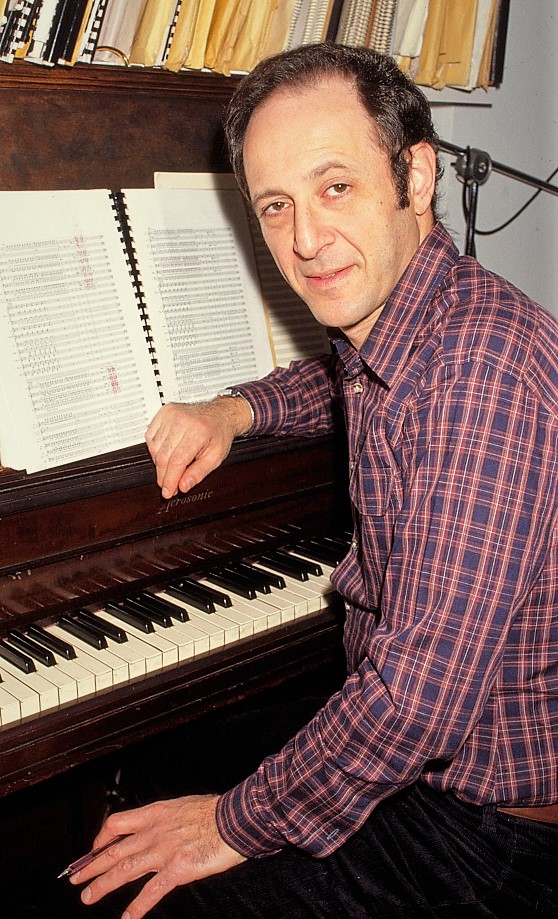
Steve Reich marks his 90th year with a new work inspired by the Book of Proverbs
The Colin Currie Group premiered 'In All Your Ways' at the Edinburgh International Festival, opening a season of birthday concerts across Europe and North America.
Read the story →Israeli surgeons replace half a teenager's pelvis with a 3D-printed implant
Clalit teams at Schneider and Beilinson removed a bone tumour judged inoperable abroad and rebuilt the pelvis with a custom titanium and polymer implant in a 19-hour operation.
Read the story →IsraAID sends emergency team to Nepal after deadly glacier flood
Israel's largest humanitarian NGO arrived within 48 hours to give hygiene kits and mental-health support to families and children who lost their homes.
Read the story →Sickle wear shows hunter-gatherers managed wild grain 15,000 years ago
A University of Haifa study of 158 flint blades finds that the Natufians harvested cereals for weeks at chosen stages of ripeness, an early form of cultivation long before farming.
Read the story →Weizmann scientists find the gut's scaffolding 'remembers' inflammation, driving IBD
Irit Sagi and Moshe Biton's team shows a damaged extracellular matrix can steer stem cells toward chronic inflammation, and identifies collagen 18 as a target.
Read the story →Bill Ackman and Neri Oxman pledge $400 million to a new Manhattan brain institute
The Ackman Oxman Institute will combine neuroscience, rehabilitation and longevity research on a West Side campus, with a mandate to turn discoveries into treatments quickly.
Read the story →Michael Bloomberg gives $155 million for a public science hall in Boston
The largest gift in the Museum of Science's history funds a venue named for Bloomberg's parents, where the public can meet scientists on AI, climate, health and space.
Read the story →Shmuel Harlap, donor behind Israel's largest healthcare gift, dies at 82
The Colmobil chairman and Mobileye investor gave about $180 million for a heart and brain tower at Beilinson Hospital and called it the Tower of Hope, not after himself.
Read the story →Tal Dvir's engineered spinal cord moves toward its first human patient
Matricelf and Loewenstein Rehabilitation Center begin selecting paralysed patients for a personalised spinal-cord implant grown from their own cells, targeted for 2027.
Read the story →Bar-Ilan study finds paying attention to an inflamed spot makes it calm down faster
In three experiments, nearly 90% of volunteers showed a smaller skin inflammation when they focused on it rather than being distracted, hinting at a brain-immune link.
Read the story →Hebrew University's Inbal Arnon finds baby finches learn songs by language's rules
Young Bengalese finches build their songs from 'word'-like units that follow the same statistical law as human speech, suggesting learning itself shapes language.
Read the story →Neanderthal pelvises reveal how modern men's hips evolved for efficient walking
A Tel Aviv University-led study finds male Neanderthal pelvises resemble modern women's, suggesting it was the modern male hip that changed, not the female one.
Read the story →Weizmann team finds one brain gene keeps stress and metabolism in balance
Switching off the developmental gene Otp in adult mice raised stress hormones, caused depression-like behaviour and disrupted thyroid and fat metabolism.
Read the story →Israeli search-and-rescue team joins Colombia earthquake relief
An 80-person Israeli delegation searched collapsed buildings in Cali and helped assess damage after a magnitude 7.4 quake hit western Colombia.
Read the story →Israeli-made AstroRad vest could cut astronauts' solar-storm radiation by up to 60%
Artemis I data analysed in Science Advances show StemRad's vest, flown on a mannequin around the Moon, would sharply reduce doses in an extreme solar storm.
Read the story →Bernie Marcus's foundation gives USC $28.7 million to regrow heart muscle with stem cells
The gift funds a 2027 clinical trial of lab-grown heart cells for heart-attack survivors and research to spare patients lifelong immune-suppressing drugs.
Read the story →Hebrew University team finds how folic acid prevents spinal and brain birth defects
The vitamin appears to work by switching on an enzyme, ALDH1L1, that makes a vitamin A-based signal the embryo needs to close its neural tube.
Read the story →Weizmann scientists show DNA's shape decides whether damage gets repaired
A Weizmann–Rowan study finds repair enzymes struggle where DNA stays flat, matching mutation hotspots in human tumors and challenging the idea that mutations are random.
Read the story →Israeli neuroscientist Haim Sompolinsky shares the 2026 Dirac Medal
ICTP honours the Hebrew University and Harvard theorist, with three colleagues, for carrying the physics of disordered systems into brain science and artificial intelligence.
Read the story →Israeli scientists find the nervous system shields fertility from heat
Hebrew University and Tel Aviv University researchers show neurons send small RNA signals that protect worms' sperm from heat damage, a clue for a warming world.
Read the story →Tel Aviv University's $60 blood test spots lung cancer without DNA sequencing
Yuval Ebenstein's optical chip reads chemical fingerprints on DNA in the blood and caught 93% of stage 2–4 lung cancers in a 103-person study.
Read the story →Hebrew University physicists discover why growing surfaces suddenly dimple
Eran Sharon and Michael Moshe identify a new geometric rule behind the crumpling of growing sheets, with uses in shape-shifting materials and soft robots.
Read the story →Howard Cedar's team shows the body ages one cell at a time
Single-cell DNA methylation maps from Hebrew University reveal tissues as mosaics of young and fast-ageing cells, pointing to new targets against age-related disease.
Read the story →Israeli phage pioneers join €15 million trial against drug-resistant urinary infections
Hadassah and Hebrew University researchers join P-PEAKS UTI, a 13-country study testing personalised bacteria-killing viruses for women with recurrent E. coli infections.
Read the story →Israel's Sheba Medical Center becomes OpenAI's first hospital partner outside the US
Doctors and researchers at Israel's largest hospital gain early access to OpenAI's medical AI models, with cited evidence to support clinical decisions.
Read the story →Technion team uncovers a hidden trick bacteria use to outrun antibiotics
Roy Kishony and Idan Yelin found that bacteria can rapidly make dozens of copies of resistance genes through an unusual, hard-to-detect form of gene amplification.
Read the story →Tel Aviv University micro-robots learn to climb obstacles and ferry live bacteria
Gilad Yossifon's team combined magnetic and electric fields so cell-sized robots can move between surfaces in 3D and deliver delicate cargo intact.
Read the story →Technion and Columbia engineers build concrete structures that unfold in 14 seconds
Folded tubes that spring into shape as concrete is poured could cut formwork costs by about 94% and its carbon emissions by half, with uses from housing to disaster relief.
Read the story →Ben-Gurion University study finds brain myelin mainly saves energy, not time
Ilya Fleidervish's team showed that myelin in the cortex halves the energy cost of nerve signals without speeding them up, with lessons for multiple sclerosis research.
Read the story →Weizmann study finds Viagra's active drug may curb cancer's spread
Ayelet Erez's lab traced how sildenafil starves cancer cells of cholesterol, and Israeli health records linked the drug, especially with statins, to better survival.
Read the story →Bar-Ilan study links greener neighbourhoods to lower stress hormones in pregnancy
Hair samples from 385 pregnant women showed lower cortisol and cortisone among those living amid more vegetation during the second trimester.
Read the story →Ben-Gurion University study finds antibiotics can restore stem cells damaged by salmonella
In mice, chronic salmonella infection exhausted the blood-forming stem cells used in transplants, and antibiotic treatment brought them back to health.
Read the story →TAU model predicts which Red Sea fish will invade the warming Mediterranean
Underwater video from Eilat and Israel's coast shows that fish not tied to coral reefs are the likeliest to cross the Suez Canal, giving conservationists an early-warning list.
Read the story →Gray Foundation backs Technion-led AI scan to catch ovarian cancer earlier
Part of a new $35 million round for BRCA cancer research, the grant funds an MRI method that spots iron build-up in the fallopian tubes before cancer develops.
Read the story →Hebrew University study finds climate models miss early signs of Middle East heatwaves
Assaf Hochman and colleagues tested 11 IPCC models: they reproduce heatwaves well but often fail to capture the chain of weather patterns that builds them.
Read the story →Michal Schwartz's immune-based Alzheimer's therapy passes first clinical test
A phase 1b trial in Nature Medicine found the Weizmann-born antibody safe in early Alzheimer's patients and saw drops in markers of nerve damage.
Read the story →Haifa's Rambam tests incision-free ultrasound treatment for enlarged prostate
A first-in-human trial of Israeli startup Nina Medical's device shrinks the prostate with focused ultrasound from outside the body, without anaesthesia or a hospital stay.
Read the story →Israeli sleep study finds secondhand smoke fragments children's sleep
Ben-Gurion University and Soroka researchers found smoke-exposed children woke or surfaced from deep sleep far more often, even when their breathing was normal.
Read the story →Alfred Dreyfus statue finally gets a permanent home outside the court that cleared him
Forty years after it was made, Louis Mitelberg's bronze of the wronged Jewish officer was unveiled in front of France's Court of Cassation on the first national Dreyfus day.
Read the story →Hebrew University compound restores chemotherapy's punch against resistant brain tumours
In lab and mouse studies, blocking nitrosative stress with the experimental drug BA-101 made glioblastoma sensitive again to the standard chemotherapy temozolomide.
Read the story →New Galilee exhibition puts Huqoq's ancient synagogue mosaics on public view
'Secrets of Huqoq' at Kibbutz Ginosar shows the original Samson mosaic and finds from a 1,600-year-old Jewish village near the Sea of Galilee.
Read the story →Zuckerberg-Chan Biohub uses CRISPR and AI to find new psoriasis drug targets
A genome-wide screen of human skin cells pointed to the oxytocin receptor, and skin gels blocking it calmed psoriasis in mice as well as an injected drug.
Read the story →Sister and brother scientists find a magnetic clue to how life began
Michal Sharon of Weizmann and Yossi Paltiel of Hebrew University showed magnets can sort an amino acid by both handedness and isotope, linking two hallmarks of life.
Read the story →
Philip Glass's 'Lincoln' symphony premieres at Tanglewood for America's 250th
The Boston Symphony Orchestra gave the first performance of Glass's Symphony No. 15, which sets Abraham Lincoln's own words for baritone and orchestra.
Read the story →Technion and Tel Aviv University AI writes plain-language profiles of unknown proteins
BetaDescribe, reported in PNAS, reads a protein's sequence and describes what it probably does, helping scientists make sense of billions of uncharted proteins.
Read the story →Tel Aviv University team shows how tumours turn the immune system's cleaners into allies
Merav Cohen's lab found that macrophages that swallow dead cancer cells are reprogrammed to feed tumours with new blood vessels, a possible new drug target.
Read the story →IsraAID and JDC bring clean water and care to Venezuela after twin earthquakes
Israeli and Jewish aid groups set up water filters, child-friendly spaces and food distribution for survivors of Venezuela's deadly June earthquakes.
Read the story →Tel Aviv University and Sheba AI spots anemia from a 10-second video of the eye
Analyzing blood flow in tiny vessels on the white of the eye, the system detected anemia with 82.8% accuracy, pointing to needle-free blood screening.
Read the story →Weizmann scientists engineer a single plant to produce five psychedelic compounds
Decoding the natural recipe for DMT let scientists turn a tobacco relative into a living factory for compounds being studied as treatments for depression and PTSD.
Read the story →Bloomberg commits about $590 million to oceans, clean energy and cleaner city air
During London Climate Action Week, Bloomberg Philanthropies pledged $285 million for clean energy in developing economies and $260 million to protect the ocean.
Read the story →
Yaacov Agam, father of kinetic art, dies at 98 weeks after winning the Israel Prize
The Rishon Lezion-born artist, whose works seem to move as viewers walk past them, created landmarks from Tel Aviv's Dizengoff Square to La Défense in Paris.
Read the story →
François Englert, Nobel physicist behind the Higgs mechanism, dies at 93
The Belgian theorist, who survived the Nazi occupation in hiding as a Jewish child, helped explain how fundamental particles get their mass and shared the 2013 Nobel Prize.
Read the story →Bar-Ilan archaeologist links a 750-kg standing stone to King Hezekiah's reforms
A ritual stone carefully laid to rest inside a Judean governor's house at Tel Eton may be rare physical evidence of religious change described in the Bible.
Read the story →Jusidman family gives NIS 200 million for what will be Israel's largest rehab hospital
The roughly $68.5 million gift will help Reuth build a 540-bed rehabilitation hospital in north Tel Aviv, easing one of the biggest gaps in Israel's health system.
Read the story →
Jane Yolen, author of Owl Moon and The Devil's Arithmetic, dies at 87
One of America's most prolific children's writers, Yolen published some 450 books, including a Caldecott winner and a Holocaust novel still taught in classrooms.
Read the story →Technion's drug-free nanoparticles slow aggressive breast cancer in mice
Empty particles that mimic white blood cells kept tumor-helping immune cells away from triple-negative breast tumors, with results comparable to some immunotherapies.
Read the story →Weizmann scientists propose a statistical test for spotting alien life
By measuring how diverse a sample's amino acids are, a Weizmann-led team says it can tell material made by living things from lifeless chemistry, even in old samples.
Read the story →Israeli infant becomes first person treated with gene therapy for rare WWOX epilepsy
Doctors at Schneider Children's Medical Center delivered a healthy copy of the WWOX gene into a baby's brain, based on more than a decade of Hebrew University research.
Read the story →Hebrew University scientist's team finds signs of fire use up to 1.8 million years ago
Burned bones deep inside South Africa's Wonderwerk Cave suggest early human ancestors were using fire far earlier than the previous record, thanks to a new glow-based test.
Read the story →Billie Tisch, first woman elected to lead New York's Jewish federation, dies at 98
The philanthropist helped steer the merger that created UJA-Federation of New York and supported hospitals, universities and public radio for more than six decades.
Read the story →Hebrew University study: plants absorb more CO2 by saving water, not by adapting to heat
Two decades of global data show leafier canopies and more efficient water use, not heat tolerance, drive rising carbon uptake, a lesson for climate models.
Read the story →Hebrew University scaffold could cut the cost of lab-grown steak
Binding costly growth proteins to a plant-based cellulose framework let cow stem cells form steak-like tissue with up to ten times less of the most expensive ingredient.
Read the story →Hebrew University study ties a fast-growth gene to early aging and cancer
Editing the vgll3 gene in short-lived killifish sped up growth and maturity but shortened life and raised tumor risk, offering clues for research on aging and cancer.
Read the story →Beilinson doctors perform Israel's first in-womb surgery on a placental tumour
A tumour on the placenta had pushed a 25-week fetus into heart failure; surgeons sealed its blood supply through an endoscope while the baby stayed in the womb.
Read the story →Save a Child's Heart brings first group of Malawian children to Israel for heart care
Ten children aged 2 to 19, found during a screening mission in Blantyre, arrived at Wolfson Medical Center for surgery and catheter treatment.
Read the story →Yad Vashem to open its first Holocaust education centre outside Israel, in Munich
Israel's Holocaust memorial will build a teaching centre in the city where the Nazi Party was born, with a branch in Leipzig, to train educators and reach young Germans.
Read the story →Pears Foundation funds Israeli NGO to protect 1.5 million Ethiopians from trachoma
A £1.7m ($2.3m) five-year grant to the NALA Foundation aims to stop the blinding eye disease from returning after US aid cuts.
Read the story →Olympus buys Israeli BioProtect, maker of a prostate radiation spacer, for $270 million
The Netanya company's biodegradable balloon shields healthy tissue during prostate cancer radiation and has been used in more than 11,000 procedures.
Read the story →Weizmann team finds immune memory cells that recognise ovarian tumours
Memory B cells in patients' lymph nodes carry instructions for antibodies that bind ovarian cancer cells, pointing towards future cancer vaccines.
Read the story →Bar-Ilan study turns back signs of ageing in the livers of old mice
Boosting the protein SIRT6 restored a youthful packaging of DNA in liver cells of elderly mice, lowering inflammation and improving metabolism.
Read the story →Tel Aviv University injection limits nerve damage after spinal cord injury in animals
Clearing excess glutamate from the blood in the hours after injury let treated animals regain up to 80% of normal movement, against about 30% untreated.
Read the story →Ben-Gurion University maps how two common drugs may protect the heart's rhythm
In rats after a heart attack, semaglutide and colchicine each curbed the scarring and inflammation that set the stage for the most common heart-rhythm disorder.
Read the story →Weizmann scientists show how many prostate tumours escape hormone therapy
A gene fusion found in about half of prostate cancers lets tumours switch to cortisol for growth; blocking both pathways worked better in mice.
Read the story →WhatsApp co-founder Jan Koum gives $200 million to Jerusalem's Shaare Zedek hospital
The largest gift ever made to an Israeli medical institution will fund a 24-storey tower and rename the hospital the Koum Shaare Zedek Medical Center.
Read the story →Hadassah surgeons use 3D-printed implants to rebuild a leg lost to vanishing bone disease
Custom-printed pelvis, hip and extendable femur implants restored about 8 cm of length to a young woman's leg, letting her walk without crutches.
Read the story →Iris Shai links losing deep belly fat to a healthier brain and lower diabetes risk
Following hundreds of trial volunteers for up to 16 years, her team found that visceral fat, not weight, tracked with brain shrinkage, memory and later diabetes.
Read the story →CultivAid founder Tomer Malchi wins the 2026 Charles Bronfman Prize
The Israeli agronomist was honoured for building farmer training and technology centres in Ethiopia, Tanzania and Kenya that aim to make African agriculture self-sustaining.
Read the story →Weizmann Institute opens Africa's first mobile climate laboratory in Kenya
A lab with more than 30 instruments at Kapiti, Kenya, will measure carbon, water and energy flows to help fill Africa's gap in ground-level climate data.
Read the story →Mandel Foundation's $125 million gift is the largest to higher education in Ohio
The Cleveland foundation created by brothers Jack, Joseph and Morton Mandel will fund a humanities building, social-work scholarships and more at Case Western Reserve.
Read the story →Henry and Susan Samueli give $50 million to cancer research at Israel's Beilinson Hospital
Described as the largest research gift ever made to an Israeli medical institution, it doubles the couple's backing for an integrative cancer institute and an AI centre.
Read the story →Tel Aviv University's GOFLOW uses AI to map fine ocean currents from satellite images
The system reads sequences of sea-surface temperature images to reveal currents smaller than 30 km, giving the first direct satellite view of ocean divergence.
Read the story →Zuckerberg- and Chan-backed Biohub commits $500 million to open data for AI cell models
The Virtual Biology Initiative will generate huge, freely shared datasets so AI can learn to predict how human cells behave in health and disease.
Read the story →Bloomberg pledges $350 million more to cut road deaths in 13 countries
Announced at CityLab 2026 in Madrid, the new phase of the Bloomberg road safety initiative aims to save a million lives by 2030 in more than 30 cities.
Read the story →Ancient grains from Judean Desert caves rewrite the story of wheat domestication
Israeli-led geneticists sequenced wheat up to 6,000 years old and found that domestication was a mosaic of separate wild populations mixing over time.
Read the story →
Krembo Wings founder Adi Altschuler wins the Israel Prize for young leadership
The educator who started an inclusive youth movement at 16 was the first winner of a new Israel Prize category for young leaders.
Read the story →Michael Tilson Thomas, conductor who built the New World Symphony, dies at 81
The longtime San Francisco Symphony music director, grandson of Yiddish theater stars, leaves a legacy of recordings, new music and a training orchestra for young players.
Read the story →Cave climate pioneer Mira Bar-Matthews receives the Israel Prize in earth sciences
The Geological Survey of Israel researcher turned stalactites from Soreq Cave into one of the world's key records of past climate and ancient earthquakes.
Read the story →RNA biologist Shulamit Michaeli receives the Israel Prize in life sciences
The Bar-Ilan microbiologist was honoured for decades of work on how disease-causing parasites handle their RNA, research now feeding into a new skin-infection treatment.
Read the story →
Michael and Susan Dell pledge $750 million for an 'AI-native' Texas medical center
The gift creates the UT Dell Medical Center and a 300-acre research campus in Austin, making the Dells the University of Texas's first billion-dollar donors.
Read the story →Medtronic buys Israel's CathWorks after its AI heart test matches the invasive standard
The $585 million deal follows a 1,900-patient trial showing CathWorks' wire-free FFRangio angiogram analysis was as safe as pressure-wire testing.
Read the story →
LACMA opens the David Geffen Galleries, its new home for the permanent collection
Peter Zumthor's long-awaited building, named for the music and film mogul whose $150 million pledge anchored its funding, adds 110,000 square feet of galleries in Los Angeles.
Read the story →
Nobel physicist David Gross wins $3 million Special Breakthrough Prize
The theorist who helped explain the strong nuclear force, and who grew up in Jerusalem, was honoured for a lifetime of work from quarks to string theory.
Read the story →Ben-Gurion University team finds a protein that helps aggressive breast cancer spread
Lowering PKC-eta slowed tumours and sharply cut metastasis in lab and animal models of triple-negative breast cancer, pointing to a new marker and drug target.
Read the story →Weizmann and Sheba scientists map the healthy human liver in unprecedented detail
A Nature atlas built from living donors shows the liver works in eight zones, not three, and hints at why fatty liver disease starts where it does.
Read the story →Bar-Ilan team shows one DNA letter outside any gene can switch a mouse's sex
Editing a regulatory switch called Enh13 made genetically female mice develop as males, pointing to hidden causes of unexplained differences of sex development.
Read the story →FDA approves Israeli Endospan's NEXUS stent graft for aortic arch repair without open surgery
The device lets high-risk patients have the aortic arch repaired through a catheter; weeks later Artivion bought the Herzliya company for $135 million upfront.
Read the story →Weizmann-led study finds ice has built up at the Moon's poles for over a billion years
Oded Aharonson and colleagues show that the oldest permanently shadowed craters hold the most ice, pointing future lunar missions to the best places to look for water.
Read the story →Weizmann physicists film weaver ants building nests with living zippers and weights
A 52-camera study by Ofer Feinerman's lab shows how hundreds of ants without a leader reliably fold leaves into a closed, sphere-shaped nest.
Read the story →Hebrew University AI tool EvORanker helps pinpoint the genes behind rare diseases
By comparing how genes evolved across more than 1,000 species, the algorithm ranked the true disease gene first in nearly 70% of tested cases.
Read the story →Edna Foa, whose exposure therapy made PTSD treatable, dies at 88
The Haifa-born Penn psychologist developed prolonged exposure therapy and trained therapists worldwide, making PTSD and OCD conditions people can recover from.
Read the story →Harold Ellis, surgeon who taught anatomy to generations of doctors, dies at 100
The East End-born son of Polish-Jewish immigrants wrote Clinical Anatomy, a standard textbook for medical students since 1960, and kept teaching into his nineties.
Read the story →Technion AI reads routine biopsy slides to predict who benefits from breast cancer chemo
Validated on samples from the 10,000-patient TAILORx trial, the model could spare many women unnecessary chemotherapy using only standard pathology images.
Read the story →Technion physicists film 'dark points' in light waves moving faster than light
A Nature study led by Ido Kaminer confirms a 1970s prediction that vortices in waves can outrun light without breaking Einstein's speed limit.
Read the story →Trauma surgeon Avraham Rivkind wins Israel Prize for lifetime achievement
The Hadassah surgeon who founded Israel's first trauma centre in 1992 and built a national model for emergency care receives the country's highest civilian honour.
Read the story →Tel Aviv University physicists build ultra-low-energy graphene switch from sliding layers
Nanoscale graphene islands that change their layer stacking with a tiny push could lead to faster, far more energy-efficient memory and brain-like computer chips.
Read the story →Tel Aviv University team finds early humans shaped tools around fossils
Hundreds of handaxes from Israel's Sakhnin Valley, some deliberately built around fossils and geodes, hint that Homo erectus had a sense of wonder and aesthetics.
Read the story →Weizmann mass-mating experiment shows even yeast are choosy about partners
Mixing 10 million cells from about 100 strains, Yitzhak Pilpel's lab found yeast prefer certain mates and that the right genetic distance yields the fittest offspring.
Read the story →Hebrew University team finds the oldest clay ornaments in Southwest Asia
142 beads and pendants, some bearing children's fingerprints, show Natufian hunter-gatherers in Israel used clay for adornment about 15,000 years ago, before farming began.
Read the story →Shulamit Levenberg's lab bioprints living tissue flap with its own blood supply
The Technion implant of muscle, fat, blood and lymph vessels integrated quickly in rats, a step toward repairing severe tissue loss after trauma, burns or cancer surgery.
Read the story →Rotem Sorek's lab uses AI protein models to find how viruses gag bacterial immune alarms
Scanning 32 million viral genes with AlphaFold, Weizmann scientists found three new families of 'sponge' proteins that soak up bacteria's immune signals.
Read the story →Stewart and Lynda Resnick give UCLA Health $100 million for mental health care
The largest gift in UCLA's history for mental health will expand the Resnick Neuropsychiatric Hospital from 74 to 119 beds and add a crisis unit.
Read the story →
Bloomberg Philanthropies awards $1 million each to 24 cities in Mayors Challenge
Winners from 20 countries, from Cape Town to Netanya, will scale tested ideas on waste, housing, health care, flooding and food security with Michael Bloomberg's funding.
Read the story →Israel Museum shows the Great Isaiah Scroll at full length for the first time since 1968
For its 60th anniversary the Jerusalem museum unrolled the 2,100-year-old Dead Sea Scroll, the only complete biblical book found at Qumran, for a rare four-month display.
Read the story →
Isaiah Zagar, mosaic artist behind Philadelphia's Magic Gardens, dies at 86
Zagar covered tens of thousands of square feet of Philadelphia walls with mirror and tile mosaics and turned two empty lots into a beloved public art space.
Read the story →
A 2,700-year-old house reveals how elders lived and led families in ancient Israel
Bar-Ilan archaeologist Avi Faust used the layout and contents of a home at Tel Eton to recover the overlooked role of older people in Iron Age households.
Read the story →
Frederick Wiseman, who filmed how American institutions really work, dies at 96
Over nearly six decades the documentarian made more than 40 films about schools, hospitals, courts and cities, starting with the landmark Titicut Follies.
Read the story →Israeli aid group NATAN sends medical team to flood-hit Mozambique
Volunteer doctors, nurses and social workers ran mobile clinics in southern Mozambique for two weeks, treating more than 500 women and children after severe floods.
Read the story →
Israeli-Ethiopian study shows gut microbes help shore up immunity in early HIV
A team led by Eran and Hila Elinav found that the microbiome of people in early HIV infection boosts key immune cells, pointing to cheap future therapies.
Read the story →FDA approves Novocure's tumor-treating fields for pancreatic cancer
A wearable device based on Israeli physician Yoram Palti's invention became the first new US-approved treatment for locally advanced pancreatic cancer in decades.
Read the story →
Weizmann and WashU scientists turn cancer-fighting CAR-T cells against Alzheimer's plaques
Engineered immune cells cleared amyloid deposits and calmed inflammation in mouse brains, the first use of CAR-T against a neurodegenerative disease.
Read the story →
Judy Chicago's first Dutch solo show puts her Jewish roots at the centre
Amsterdam's Jewish Museum and London's Serpentine presented 'Revelations', built around a long-hidden illuminated manuscript the feminist artist made alongside 'The Dinner Party'.
Read the story →Israeli AI researcher Lior Rokach named to the UN's first scientific panel on AI
The Ben-Gurion University computer scientist is one of 40 experts chosen from about 2,600 applicants to assess how artificial intelligence is changing the world.
Read the story →
Igal Talmi, a founder of nuclear physics in Israel, dies at 101
The Weizmann Institute physicist, a student of Wolfgang Pauli, helped build the nuclear shell model and trained generations of Israeli scientists.
Read the story →PBS series traces five centuries of Black and Jewish American history
Black and Jewish America: An Interwoven History, hosted by Henry Louis Gates Jr., brings together rabbis, scholars and artists to explore an alliance and its strains.
Read the story →
Technion-led team makes first direct measurement of cosmic rays in a star-forming cloud
Using the James Webb Space Telescope, Shmuel Bialy and colleagues caught the faint glow of hydrogen excited by cosmic rays in the dark nebula Barnard 68.
Read the story →Vancouver's Roadburg Foundation pledges C$50 million to Galilee's first university
The largest gift in Tel-Hai's history will help the college become the University of Kiryat Shmona in the Galilee, with new buildings, faculty and a regional institute.
Read the story →
Weizmann-led team remeasures Jupiter and finds it slightly smaller and flatter
Using radio signals from NASA's Juno probe, Yohai Kaspi and Eli Galanti produced the most precise measurement yet of the largest planet's size and shape.
Read the story →
Weizmann's Reshef Tenne, discoverer of inorganic nanotubes, wins Israel Prize
The kibbutz-born chemist whose 1992 discovery of inorganic fullerene-like nanoparticles led to industrial lubricants received Israel's highest honour in chemistry.
Read the story →Weizmann study finds genes explain about half of human lifespan, double past estimates
Uri Alon's team showed in Science that deaths from accidents and infections had masked how strongly heredity shapes how long people live.
Read the story →Technion-led team unveils 'living' implant that senses glucose and makes insulin
A cell-based implant shielded from immune attack controlled blood sugar in diabetic mice for a year, raising hopes of an artificial pancreas without injections.
Read the story →
Sandy and Joan Weill give $120 million, the largest gift ever to veterinary medicine
The former Citigroup chief and his wife funded a new animal teaching hospital and cross-species disease research at UC Davis, which renamed its veterinary school for them.
Read the story →Boeing and the Technion move to build jet fuel from green hydrogen and captured CO2
After a feasibility study, the Boeing-Technion sustainable aviation fuel centre entered a development phase aimed at commercial production and a new fuel-testing facility.
Read the story →Hebrew University astrophysicist argues the 'habitable zone' is far wider than thought
Amri Wandel's model suggests tidally locked planets close to small stars, and icy worlds far from them, could still hold liquid water, multiplying places worth searching for life.
Read the story →FDA clears Israeli firm Aidoc's single AI model for 14 emergency CT findings
Tel Aviv-based Aidoc won US clearance for an AI triage system that flags more than a dozen urgent conditions on abdominal CT scans with one foundation model.
Read the story →Israeli trial links brain's reward centre to stronger vaccine antibody response
Volunteers who learned to boost activity in a reward region of the brain made more antibodies after a hepatitis B shot, a first such finding in humans.
Read the story →Harry Olmer, Windermere Boy turned dentist and Holocaust educator, dies at 98
Liberated at Terezín in 1945, Olmer came to Britain as one of 'The Boys', practised dentistry until 86 and spent his later years telling young people his story.
Read the story →Israeli-led AI model reads glucose data to flag diabetes risk years ahead
GluFormer, built by Eran Segal's Weizmann lab with Nvidia researchers in Israel and published in Nature, forecasts diabetes and heart risk from a week or two of glucose readings.
Read the story →John Paulson adds $19 million for Hebrew University engineering, total now $46 million
The Paulson Family Foundation's new gift funds an electrical engineering building on the Hebrew University's Jerusalem science campus, among its largest donations ever.
Read the story →Hebrew University team makes flexible, see-through solar cells for windows
Shlomo Magdassi and Lioz Etgar's labs built colour-tunable, semi-transparent perovskite cells with 3D-printed pillars, aiming at power-generating windows and façades.
Read the story →Smiles and frowns are planned by a whole network of brain regions, Science study finds
Work led by the Hebrew University's Yifat Prut and Rockefeller University's Winrich Freiwald overturns the idea that voluntary and emotional expressions use separate brain systems.
Read the story →Weizmann team finds strong evidence of 'memory particles' for robust quantum computing
Yuval Ronen's team measured half-electron and quarter-electron charges in bilayer graphene, signatures of non-Abelian anyons that could store quantum data safely.
Read the story →Brainless jellyfish and sea anemones sleep to repair DNA, Bar-Ilan study finds
Lior Appelbaum and Oren Levy's teams found that animals with only a simple nerve net sleep about eight hours a day, pointing to sleep's ancient role in protecting neurons.
Read the story →Jerusalem's Lightricks releases its 4K video-and-sound AI model with open weights
At CES 2026 the maker of Facetune published the weights and training code of LTX-2, letting researchers and small firms run a top-tier video generator on their own machines.
Read the story →Gene-by-gene CRISPR screen maps brain development and finds a new childhood disorder
A Hebrew University-led team knocked out some 20,000 genes one at a time, identifying 331 needed to make neurons and pinning a rare developmental disorder on the gene PEDS1.
Read the story →Tel Aviv University team uncovers how breast cancer spreads to the brain
Losing the p53 gene pushes tumour cells to make extra fat with help from brain cells; existing drugs that block the enzyme SCD1 slowed brain tumours in mice.
Read the story →Eva Schloss, Auschwitz survivor and tireless Holocaust educator, dies at 96
Anne Frank's childhood neighbour and later stepsister co-founded the Anne Frank Trust UK and spent four decades teaching young people about the Holocaust and prejudice.
Read the story →