- Person
- Maurice Sendak
- Lived
- 1928–2012
- Field
- Children's Literature
- From
- American
The story
Brundibár is a short opera for children by the Czech Jewish composer Hans Krása, with a libretto by Adolf Hoffmeister. They wrote it in 1938 for a government competition that was cancelled. Its story is a simple fable: a fatherless brother and sister, Aninka and Pepíček, need money to buy milk for their sick mother, and with the help of a sparrow, a cat, a dog and the town's children they drive away the bullying organ-grinder Brundibár, whom audiences understood to stand for Hitler.
The opera's history made it unforgettable. It was first performed in the winter of 1942 at the Jewish orphanage in Prague. By then Krása had been deported to the Theresienstadt camp, and by July 1943 nearly all the children of the chorus had followed. In the camp Krása rebuilt the score from memory for the instruments available, and Brundibár premiered there on 23 September 1943. It was performed 55 times in the following year; the children were allowed to remove their yellow stars only while they were on stage. Many of the young performers, and Krása himself, were later murdered at Auschwitz.
Maurice Sendak, whose parents' extended families in Poland were killed in the Holocaust, felt a deep connection to the story. In the 1990s he approached the playwright Tony Kushner to write a new English version. Kushner wrote the text for Sendak's illustrated book Brundibár, published in 2003. Sendak drew the organ-grinder with a Hitler moustache, making the symbolism plain. The book was named one of The New York Times Book Review's ten best illustrated books of 2003 and a Sydney Taylor Book Award Notable Book, and the novelist Gregory Maguire wrote that in a career with inevitable lesser works, Brundibár was not lesser than anything.
The collaboration also reached the stage. In 2003 Chicago Opera Theater performed the opera with Kushner's libretto, directed and designed by Sendak. In 2005 Berkeley Repertory Theatre, with Yale Repertory Theatre and New York's New Victory Theater, staged a substantially reworked version, with sets designed by Sendak and Kris Stone, paired with a short comic opera by Bohuslav Martinů.
Through the book and the productions, a new generation of children met the story of the young singers of Theresienstadt. Brundibár remains a way to teach the Holocaust that honours the courage of art made in the darkest of places and the children who sang it.
Why it matters
Sendak and Kushner helped a new generation learn about the children of Theresienstadt and the courage of art made in the darkest of places.
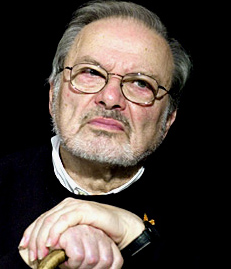
About Maurice Sendak
Author and illustrator of "Where the Wild Things Are"; redefined the picture book.
More about Maurice Sendak
- Sendak illustrated Little Bear and produced its TV seriesMaurice Sendak illustrated the first five Little Bear books by Else Holmelund Minarik and later co-created and produced the Little Bear television series (1995–2001).
- Sendak designed sets and costumes for major operasA lifelong music lover, Maurice Sendak designed sets and costumes for operas including Prokofiev’s The Love for Three Oranges at Glyndebourne (1982) and Hansel and Gretel (1997).
- Sendak created the musical Really Rosie with Carole KingMaurice Sendak wrote and directed Really Rosie, a 1975 animated television musical featuring the voice of Carole King.
- Sendak helped shape Sesame StreetMaurice Sendak was an early member of the national board of advisors of the Children's Television Workshop as Sesame Street was being developed, and created animations for it.
- Sendak made a picture book about the AIDS crisisIn 1993 Maurice Sendak published We Are All in the Dumps with Jack and Guy, a picture book about the AIDS crisis.
Sources
- Maurice Sendak Wikipedia
- Brundibár Wikipedia
Another act of tikkun olam. This is part of tikkun olam, the Jewish idea of repairing the world, and every one of us can add to it.