- Person
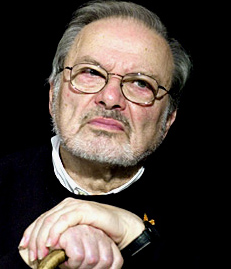
- Maurice Sendak
- Lived
- 1928–2012
- Field
- Children's Literature
- From
- American
The story
In 1968 the television producer Joan Ganz Cooney and the psychologist Lloyd Morrisett set up the Children's Television Workshop, backed by a $1 million grant from the Carnegie Institute, to create an educational television programme for young children. The Harvard professor Gerald Lesser designed the educational goals and chaired the first advisory board, and the Workshop gathered experts and artists to advise on what would work.
Maurice Sendak was an early member of the Workshop's National Board of Advisors while Sesame Street was being developed. By then he was one of the best-known picture-book artists in the country, the creator of Where the Wild Things Are, with a deep understanding of how children think and feel.
Sesame Street premiered on 10 November 1969 on National Educational Television stations, and Sendak also contributed directly to the show, creating two animated stories. Bumble Ardy was an animated sequence with Jim Henson voicing the title character. The second was Seven Monsters.
Both stories had long afterlives. Sendak turned Seven Monsters into the book Seven Little Monsters (1977), which was itself adapted as an animated television series that he produced from 2000 to 2003. In 2011 he turned Bumble Ardy into a picture book, the first he had both written and illustrated in more than thirty years and the last published in his lifetime.
Sesame Street went on to become one of the most influential educational programmes in the world. By 2019 an estimated 190 million children had watched more than 160 versions in 70 languages, and it has won more Emmy Awards than any other children's programme.
Sendak's involvement reflected his conviction that good art for children should reach them wherever they are, including on television. His early advice and animations formed a small part of a programme that helped millions of young children learn to read and count.
Why it matters
Sendak lent his understanding of children to a programme that has helped millions of young children learn to read and count.
About Maurice Sendak
Author and illustrator of "Where the Wild Things Are"; redefined the picture book.
More about Maurice Sendak
- Sendak illustrated Little Bear and produced its TV seriesMaurice Sendak illustrated the first five Little Bear books by Else Holmelund Minarik and later co-created and produced the Little Bear television series (1995–2001).
- Sendak designed sets and costumes for major operasA lifelong music lover, Maurice Sendak designed sets and costumes for operas including Prokofiev’s The Love for Three Oranges at Glyndebourne (1982) and Hansel and Gretel (1997).
- Sendak created the musical Really Rosie with Carole KingMaurice Sendak wrote and directed Really Rosie, a 1975 animated television musical featuring the voice of Carole King.
- Sendak made a picture book about the AIDS crisisIn 1993 Maurice Sendak published We Are All in the Dumps with Jack and Guy, a picture book about the AIDS crisis.
- Sendak revived Brundibár, sung by children in TheresienstadtMaurice Sendak and Tony Kushner brought new life to Brundibár, a children's opera performed by Jewish children in the Theresienstadt camp, as a 2003 book and stage production.
Sources
- Maurice Sendak Wikipedia
- Sesame Street Wikipedia
Another act of tikkun olam. This is part of tikkun olam, the Jewish idea of repairing the world, and every one of us can add to it.