- Person
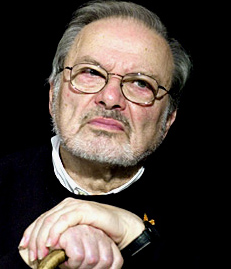
- Maurice Sendak
- Lived
- 1928–2012
- Field
- Children's Literature
- From
- American
The story
By the early 1990s Maurice Sendak was the most celebrated picture-book artist in America, the creator of Where the Wild Things Are, In the Night Kitchen and Outside Over There. He had long believed that children were not fragile innocents to be shielded from the world but full human beings who lived through fear, anger and loss. Outside Over There (1981), darker than his earlier books, had already been published on both adult and children's lists.
At the same time, the AIDS epidemic was devastating New York, including its communities of artists and writers. Sendak chose to address the crisis in a picture book.
We Are All in the Dumps with Jack and Guy, published by HarperCollins in 1993, is built on two traditional Mother Goose rhymes. Sendak had first come across the verses years earlier while helping the folklorist Iona Opie choose rhymes for children's books, and they stayed with him until he found a way to join them. In the first rhyme everyone is in the dumps, the kittens have gone and the houses have no walls; in the second, Jack and Guy find a little boy with a black eye and decide, in the end, to bring him up as other folk do.
From those few lines Sendak made a 56-page story told mostly in pictures. In a ragged settlement of homeless children, rats carry off kittens and a small boy, and Jack and Guy set out to rescue them, through a dreamlike landscape lit by a huge moon. The book takes on the AIDS crisis directly, alongside poverty and homelessness, and it ends on a note of hope, with the lost child taken in and cared for.
Reviewers recognised it as one of the most serious and ambitious books of his career. Booklist praised the dignity, hope and endurance of its homeless children and the joy it found even in a bleak world, while predicting that librarians would debate where to shelve it. Many readers have since treated it as a book for older children and adults as much as for the very young.
The book embodied what the critic Margalit Fox later described as Sendak's achievement: wrenching the picture book out of the safe, sanitised nursery and into the darker recesses of the human psyche. It showed that even the hardest public crises of the day could be faced honestly, and with compassion, in a picture book.
Why it matters
Sendak used his authority as America's leading picture-book artist to bring compassion for the sick and the homeless into children's literature.
About Maurice Sendak
Author and illustrator of "Where the Wild Things Are"; redefined the picture book.
More about Maurice Sendak
- Sendak illustrated Little Bear and produced its TV seriesMaurice Sendak illustrated the first five Little Bear books by Else Holmelund Minarik and later co-created and produced the Little Bear television series (1995–2001).
- Sendak designed sets and costumes for major operasA lifelong music lover, Maurice Sendak designed sets and costumes for operas including Prokofiev’s The Love for Three Oranges at Glyndebourne (1982) and Hansel and Gretel (1997).
- Sendak created the musical Really Rosie with Carole KingMaurice Sendak wrote and directed Really Rosie, a 1975 animated television musical featuring the voice of Carole King.
- Sendak helped shape Sesame StreetMaurice Sendak was an early member of the national board of advisors of the Children's Television Workshop as Sesame Street was being developed, and created animations for it.
- Sendak revived Brundibár, sung by children in TheresienstadtMaurice Sendak and Tony Kushner brought new life to Brundibár, a children's opera performed by Jewish children in the Theresienstadt camp, as a 2003 book and stage production.
Sources
- Maurice Sendak Wikipedia
- We Are All in the Dumps with Jack and Guy Goodreads
Another act of tikkun olam. This is part of tikkun olam, the Jewish idea of repairing the world, and every one of us can add to it.