- Person
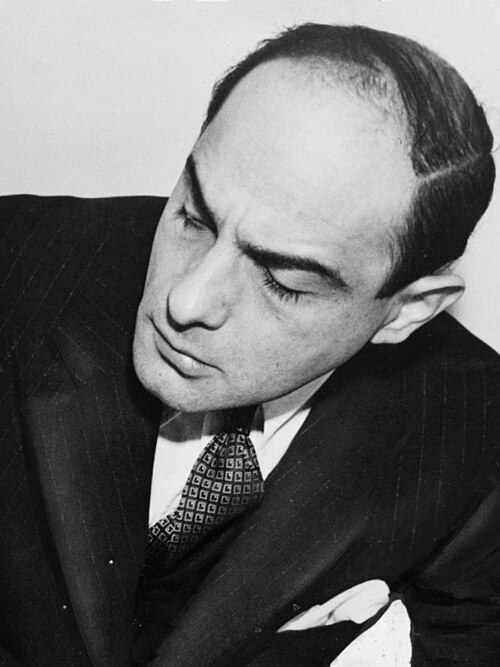
- Lorenz Hart
- Lived
- 1895–1943
- Field
- Broadway lyricist
- From
- American
The story
Lorenz Hart, the son of German Jewish immigrants in New York, had written lyrics for the composer Richard Rodgers since 1919. After a spell in Hollywood during the Depression, the pair returned to Broadway in 1935 with Billy Rose's Jumbo. From 1936 to 1942 they wrote both the books and the songs for several of their shows, and EBSCO's biography of Hart calls these years the prime of their creative genius, when everything they touched seemed to turn to gold.
Babes in Arms is one of the clearest examples. The story follows a group of teenagers in a Long Island town, children of touring vaudeville performers, who put on their own show to avoid being sent to a work farm by the local sheriff. The original version also carried strong political overtones, including two Black youngsters who suffer racism. The show opened at the Shubert Theatre on 14 April 1937, with choreography by George Balanchine and a young cast that included Mitzi Green, Alfred Drake and the dancing Nicholas Brothers. It ran for 289 performances.
Although it was a fairly traditional show, EBSCO notes that its score represented songwriters at the peak of their powers. From this one musical came 'The Lady Is a Tramp', 'Johnny One-Note', 'My Funny Valentine', 'Where or When' and 'I Wish I Were in Love Again', along with the title song. PBS describes 'My Funny Valentine' as a poignant tribute to a homely lover, in which Hart fused sentiment and realism, and it singles out 'The Lady Is a Tramp' for its biting view of city life.
The show had a long afterlife. MGM filmed it in 1939, directed by Busby Berkeley and starring Judy Garland and Mickey Rooney, though, as with many Rodgers and Hart musicals, with much of the score changed. In 1959 the writer George Oppenheimer produced a revised, depoliticised book that became the most frequently staged version, and the original was revived in later decades, including a New York City Center Encores! concert in 1999.
Above all, the songs escaped the theatre. Rodgers and Hart songs have been described as intimate and destined for long lives beyond the stage, and the numbers from Babes in Arms became standard repertoire for singers and jazz musicians. Ella Fitzgerald devoted a whole songbook album to Rodgers and Hart, and the show's ballads are still sung and recorded today, more than eighty years after it opened.
Why it matters
The songs of Babes in Arms became part of the core repertoire of American popular music and jazz, and are still performed around the world.
About Lorenz Hart
Lyricist of Rodgers and Hart, whose witty, rueful words for “Blue Moon” “My Funny Valentine” and “The Lady Is a Tramp” helped make the Broadway song an art form.
More about Lorenz Hart
- Lorenz Hart helped bring Shakespeare to musical comedyRodgers and Hart's The Boys from Syracuse (1938), based on The Comedy of Errors, was a pioneering Shakespeare adaptation for musical comedy.
- Lorenz Hart turned Mark Twain's Connecticut Yankee into songRodgers and Hart's A Connecticut Yankee (1927), based on Mark Twain's novel, confirmed Hart as a leading lyricist; he revised it as his final work.
- Lorenz Hart pioneered the conversational song lyricLorenz Hart was among the first lyricists to use polysyllabic rhyme for wit and insight and to write in a natural, conversational voice.
- Lorenz Hart wrote 'Isn't It Romantic?' for the moviesIn Hollywood in the early 1930s, Lorenz Hart wrote film songs including 'Isn't It Romantic?' for Maurice Chevalier, as well as 'Lover' and 'Blue Moon'.
- Hart's I'd Rather Be Right satirised a sitting presidentRodgers and Hart's 1937 musical I'd Rather Be Right took the unprecedented step of satirising an American president still in office.
- Lorenz Hart's Pal Joey triumphed when revived in 1952Pal Joey (1940), the first musical with unromanticised realism, won the New York Drama Critics Award when revived in 1952.
- Lorenz Hart wrote lyrics for 28 Rodgers and Hart musicalsLyricist Lorenz Hart and composer Richard Rodgers wrote 28 stage musicals and more than 500 songs together, including 'Blue Moon', many now classics of the American songbook.
Sources
- Lorenz Hart EBSCO Research Starters
- Lorenz Hart PBS, Broadway: The American Musical
- Lorenz Hart Wikipedia
- Babes in Arms Wikipedia
Another act of tikkun olam. This is part of tikkun olam, the Jewish idea of repairing the world, and every one of us can add to it.