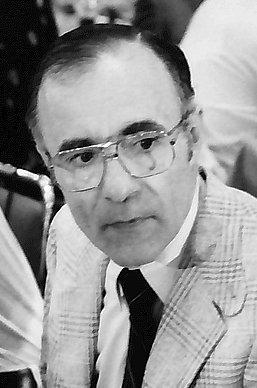
A Munich childhood cut short
Arno Allan Penzias was born on April 26, 1933, in Munich, Germany, the son of Karl Penzias and Justine Penzias (née Eisenreich), who ran a leather business. His grandparents had come to Munich from Poland and were among the leaders of the city’s Reichenbachstrasse synagogue. In his own words he spent his first six years “comfortably, as an adored child in a closely-knit middle-class family.”
That comfort did not last. When Arno was five, the family was rounded up for deportation to Poland. He later remembered scrambling up and down three tiers of narrow bunks in a very large room and then a long train journey, back and forth for several days, before the family was unexpectedly returned to Munich. The grown-ups were relieved, but the small boy began to understand that there were bad things his parents could not control, and that they had “something to do with being Jewish.” Everything would be fine, he was told, if they could only get to America.
Escape on the Kindertransport
In the late spring of 1939, shortly after Arno’s sixth birthday, his parents put him and his younger brother, Gunther, on a train to England as part of the Kindertransport, the rescue operation that carried Jewish children out of Nazi Germany. Each boy had a suitcase with his initials painted on it and a bag of sweets, and Arno was told to look after his brother. As the train pulled out he said to him, in German, “now we are alone.”
His mother received an exit permit about a month later, only weeks before the war began, and joined the boys in England. His father had also reached England, but was held in an internment camp for “alien” men. After some six months of waiting, the family sailed for New York at the end of December 1939 on the Cunard liner Georgic, using tickets that Karl Penzias had bought in Germany a year and a half earlier. They arrived in January 1940.
Building a life in New York
The family settled in the Bronx. Arno and Gunther started school while their parents looked for work. At first Karl and Justine became superintendents of an apartment building, which gave them a rent-free basement flat and a second income without leaving the children alone. Later Justine sewed in a coat factory, and Karl, whose woodworking skills had grown, found a job in the carpentry shop of the Metropolitan Museum of Art, where he also became president of his local union branch. Arno became an American citizen in 1946.
It was taken for granted that he would go to college, probably to study chemistry, the only science the family knew much about. After Brooklyn Technical High School he entered the City College of New York, which he later described as an institution devoted to “moving the children of New York’s immigrant poor into the American middle class.” He discovered physics in his first year, switched his major, and graduated in 1954, the same year he married Anne Barras. He then served two years as a radar officer in the U.S. Army Signal Corps.
Columbia, masers and Bell Labs
His army radar experience helped him win a research assistantship at Columbia University’s Radiation Laboratory, then a world centre of microwave physics led by I. I. Rabi, Polykarp Kusch and Charles Townes, the inventor of the maser. Penzias did his doctoral thesis under Townes, building a maser amplifier for a radio astronomy experiment, and received his PhD in physics from Columbia in 1962.
In 1961 he went looking for a temporary job at Bell Telephone Laboratories in Holmdel, New Jersey, whose equipment was ideal for finishing his observations. Rudi Kompfner, the director of radio research, told him to take a permanent post instead: he could always quit. Penzias stayed for thirty-seven years. Bell Labs owned a remarkable instrument, a large horn-shaped antenna built to talk to the Echo communications satellite, and when it was freed from satellite work and fitted with an ultra-low-noise maser receiver, Penzias and a newly hired radio astronomer from Caltech, Robert Woodrow Wilson, began using it for astronomy early in 1963.
A hiss from every direction
The two men set out to measure faint radio emission from our own galaxy with unprecedented care, which meant accounting for every source of noise in their system. In 1964 they found a weak, steady microwave hiss that they could not explain. It was the same in every direction and at every time of day and year, far weaker than the radiation from the Milky Way. They checked whether it came from New York City; it did not. They found pigeons nesting in the antenna and cleared out the droppings, which Penzias drily called “white dielectric material.” The noise remained.
Having ruled out every source of interference they could think of, Penzias contacted the Princeton physicist Robert Dicke, who suggested that the hiss might be the background radiation predicted by some theories of the early universe. The two groups agreed to publish side-by-side letters in the Astrophysical Journal in 1965: Penzias and Wilson reported their measurement of a background equivalent to a temperature of about 3 degrees above absolute zero, and Dicke’s team proposed the interpretation. The signal was the cosmic microwave background, the cooled afterglow of the Big Bang, which theorists including George Gamow, Ralph Alpher and Robert Herman had predicted in the 1940s and 1950s.
How the discovery changed our picture of the universe
Before 1965, astronomers argued between a universe that had a hot, dense beginning and a “steady state” universe with no beginning at all. The microwave background settled the question in favour of the Big Bang: only a universe that was once extremely hot and dense would be filled, uniformly and in every direction, with this kind of radiation. The Nobel committee said the discovery made it possible to obtain information about cosmic processes that took place at the very creation of the universe.
The background has since become one of the most powerful tools in science. Later measurements showed that its spectrum matches a body at about 3 degrees, and satellites have mapped its tiny ripples in exquisite detail, allowing cosmologists to work out the age, composition and geometry of the universe. Every modern account of where the universe came from rests on the signal that Penzias and Wilson refused to dismiss as instrument noise. For this work they received the Henry Draper Medal of the National Academy of Sciences in 1977 and shared half of the 1978 Nobel Prize in Physics; the other half went to the Soviet physicist Pyotr Kapitsa for unrelated work.
Molecules in space and the information age
Penzias did not stop with one discovery. In 1970, with Wilson and the Bell Labs physicist Keith Jefferts, he took a new millimetre-wave receiver to a radio telescope at Kitt Peak in Arizona and began finding molecules in interstellar space, revealing a rich chemistry between the stars. In 1973 the team detected DCN, the first deuterium-bearing molecule found in space, and Penzias used such measurements to trace deuterium through the galaxy. Because deuterium is made only in the Big Bang, the work gave independent support to the cosmological meaning of his earlier discovery. Colleagues nicknamed the element “Arno’s white whale.”
He also rose through Bell Labs management, becoming head of radio research in 1976 and, in 1981, vice president of research, just as the break-up of the Bell System removed much of the laboratory’s traditional funding. He spent the following years reshaping the world’s premier industrial research laboratory for a competitive age, with a growing emphasis on software, lightwave and electronics research that, as he put it, helped seed the information revolution. In 1989 he published Ideas and Information, which described computers as wonderful tools but poor role models for human intelligence.
Jewish identity and a refugee’s gratitude
Penzias was a child of German Jewish refugees, and the story of how his family escaped was the opening of every account he gave of his life. His grandparents had been synagogue leaders in Munich; his family survived because his father planned ahead, because Britain took in Jewish children, and because America eventually admitted his parents. Penzias never forgot that his chance in life came from public institutions: free schooling, a tuition-free city college, and a research laboratory willing to employ a young radio astronomer.
His later honours echoed that history. In 2019 the public observatory of Nuremberg, in the Bavaria his family had fled, dedicated a new 3-metre radio telescope to him on his 86th birthday. In 2023 the Radio Club of America created an award in his name for basic research in the radio sciences.
Later years and legacy
In the 1990s Penzias made what he called a surprising move, leaving Bell Labs for Silicon Valley, where he became an adviser and venture partner at the venture capital firm New Enterprise Associates, helping start-up companies in communications, information technology and, later, alternative energy. He had three children, David, Mindy and Laurie, from his first marriage; in 1996 he married the Silicon Valley executive Sherry Levit. He died of complications of Alzheimer’s disease in San Francisco on January 22, 2024, at the age of 90.
Arno Penzias arrived in America as a six-year-old refugee with a painted suitcase. He left behind one of the cornerstones of modern science: proof that the universe had a beginning, written in a whisper of microwaves that still fills the sky in every direction. Generations of astronomers have built on that whisper to measure the cosmos, and it remains the first piece of evidence students learn when they ask how we know the Big Bang happened.
Sources & further reading
Arno Penzias, Biographical, NobelPrize.org · Press release: The Nobel Prize in Physics 1978, NobelPrize.org · Arno Penzias, Jewish Virtual Library · Jewish Nobel Prize Winners in Physics, JINFO.ORG · Arno Allan Penzias, Wikipedia · Researched from the sources above and checked against them. Spotted an error? Tell us.
A life of tikkun olam. This is part of tikkun olam, the Jewish idea of repairing the world, and every one of us can add to it.