- Person
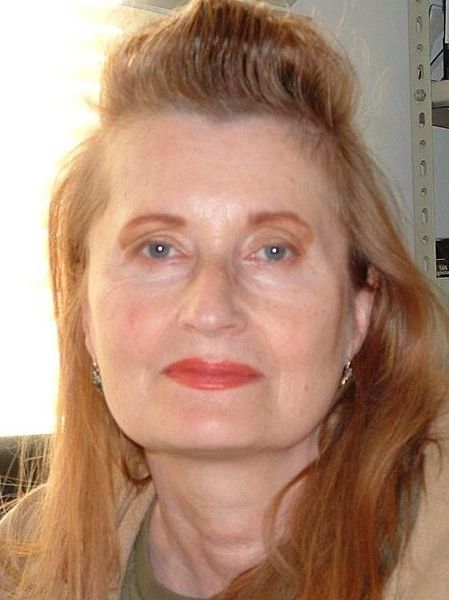
- Elfriede Jelinek
- Lived
- b. 1946
- Field
- Novels, drama
- From
- Austrian
The story
Elfriede Jelinek was born in Styria in 1946 and grew up in Vienna. Her father, of Czech-Jewish origin, escaped persecution during the war because he worked in strategically important industrial production, but many of his relatives were murdered in the Holocaust. She has stressed her Jewish identity as the daughter of a survivor, and she places her work in an Austrian-Jewish satirical tradition, citing Karl Kraus, Elias Canetti and Jewish cabaret.
For decades after 1945, Austria presented itself as Nazi Germany’s first victim and avoided examining the part many Austrians had played in the regime. Jelinek refused that silence. Her 1985 play Burgtheater satirised celebrated Viennese actors’ conduct in the Nazi era and caused a scandal. Her novel Die Kinder der Toten (1995; The Children of the Dead) depicts Austria as a land of the dead haunted by its murdered, and the Swedish Academy noted how fiercely she castigated her country in it. Her play Rechnitz (Der Würgeengel) (2008) dramatises the massacre of Jewish forced labourers at Rechnitz at the end of the war and the long silence that followed.
Her other great subject is violence against women. In novels such as Women as Lovers, Wonderful, Wonderful Times and The Piano Teacher, filmed by Michael Haneke in 2001, she shows, in the Academy’s words, a pitiless world of violence and submission, hunter and prey, and how entertainment clichés seep into people’s minds and paralyse resistance to class injustice and gender oppression.
Jelinek’s work has always been divisive, praised and condemned in equal measure. But it helped open a public reckoning in Austria with its past, and in 2004 she received the Nobel Prize in Literature for her musical flow of voices and counter-voices that reveal the absurdity of society’s clichés and their subjugating power. Her more recent play Die Schutzbefohlenen (2013; Charges) gave voice to refugees seeking asylum in Europe.
Why it matters
Jelinek’s novels and plays, staged and studied across Europe, help audiences recognise how everyday language can hide abuse and national guilt, and contributed to Austria’s long-delayed reckoning with the Holocaust.
About Elfriede Jelinek
Austrian novelist and playwright, daughter of a Czech-Jewish father, whose books (The Piano Teacher) and plays expose violence against women and the silences around Austria’s Nazi past. Nobel 2004.
Sources
- Elfriede Jelinek, Bio-bibliography NobelPrize.org
- Elfriede Jelinek, Facts NobelPrize.org
- Elfriede Jelinek Wikipedia
Another act of tikkun olam. This is part of tikkun olam, the Jewish idea of repairing the world, and every one of us can add to it.