- Person
- David Grossman
- Lived
- b. 1954
- Field
- Novelist and essayist
- From
- Israeli
The story
Many children born in Israel in the 1950s grew up among Holocaust survivors who would not speak about what they had endured. David Grossman, born in Jerusalem in 1954, was not a child of survivors himself, but he turned that silence into one of the most ambitious Hebrew novels of its era. In doing so he challenged two unspoken taboos in Israeli culture: that the Holocaust belonged to survivors and their families alone, and that it must never be the subject of elaborate imaginative fiction.
See Under: Love, published in Hebrew in 1986, is made up of four sections, each written in a different style. The first introduces Momik, a nine-year-old boy whose parents and their friends survived the camps but refuse to tell him what happened. Momik decides that a "Nazi Beast" must be hiding nearby and sets out to capture it to free his parents from their fears. In the second, the adult Momik, now a writer, travels to Poland in the footsteps of the Jewish author Bruno Schulz, imagining that Schulz escaped the Nazis by swimming away with a school of salmon.
The third section is Momik's story of his great-uncle Anshel Wasserman, a children's author held in a death camp who cannot be killed. The commandant, who loved his stories as a child, makes Wasserman tell him a new tale each night, and through it Wasserman forces the Nazi to see the humanity of his victims. The final part is written as an encyclopaedia of the brief life of a baby named Kazik, with cross-references that tie the stories together and give the novel its title.
The Erasmus Prize Foundation describes the book, which appeared in English in 1989, as Grossman's international breakthrough, portraying the Shoah through a child's eyes. Reviewers compared it with Faulkner's The Sound and the Fury, Günter Grass's The Tin Drum and García Márquez's One Hundred Years of Solitude, and admired his control of many styles and emotional tones.
Critics have described it as Grossman's towering achievement and credit it with helping lead Israelis towards a place of memory they had long kept at a distance. It remains a defining work of the generation born after the catastrophe.
Why it matters
See Under: Love gave voice to the children of survivors and showed how literature can approach the Holocaust through imagination and empathy.
About David Grossman
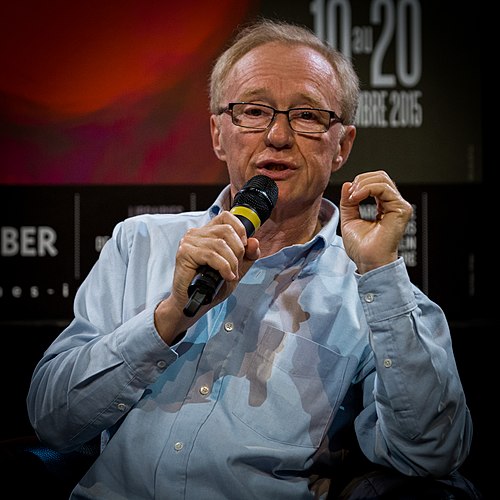
Jerusalem novelist of See Under: Love and To the End of the Land, Booker International and Israel Prize winner, and a persistent moral voice for peace and empathy.
More about David Grossman
- David Grossman wrote Falling Out of Time on griefDavid Grossman's Falling Out of Time, a work of prose and verse about parents mourning their children, has been adapted for the stage many times.
- David Grossman's Someone to Run With won the Sapir PrizeDavid Grossman's 2000 novel Someone to Run With, about a teenage boy and a runaway girl on the streets of Jerusalem, won Israel's Sapir Prize.
- David Grossman's To the End of the Land won wide acclaimDavid Grossman's 2008 novel To the End of the Land, about a mother walking the Galilee to escape news of her soldier son, won the National Jewish Book Award and the JQ Wingate Prize.
Sources
- David Grossman, Erasmus Prize 2022 Praemium Erasmianum Foundation
- David Grossman Wikipedia
- Grossman, David Encyclopedia.com
Another act of tikkun olam. This is part of tikkun olam, the Jewish idea of repairing the world, and every one of us can add to it.