- Person
- Benny Goodman
- Lived
- 1909–1986
- Field
- Jazz clarinet
- From
- American
The story
Benny Goodman was born in Chicago in 1909, the ninth of twelve children of poor Jewish immigrants from the Russian Empire. His father, David, had come from Warsaw and worked as a tailor, and the family lived in the crowded Maxwell Street neighbourhood. Goodman learned music in the boys' club band at Hull House, the settlement house that served the city's immigrant families, and went on to become the most popular bandleader of the swing era, known as the King of Swing.
In the 1930s American entertainment was strictly segregated. Black and white musicians might jam together after hours or in private, but they did not appear side by side in front of paying audiences at hotels, ballrooms and concert halls. Goodman used his drawing power to change that. He brought in the Black pianist Teddy Wilson to form the Benny Goodman Trio with the drummer Gene Krupa, and then added the Black vibraphonist Lionel Hampton to make it a quartet. Later, in 1939, he hired the Black guitarist Charlie Christian.
At first the trio and quartet appeared during intermissions rather than as part of the big band, but they were billed and seen in public as a mixed group. As one later review in The New York Review of Books put it, Goodman shook up the white entertainment establishment, and a colour line had been breached. At the Congress Hotel in Chicago, Goodman and Krupa also sat in with Fletcher Henderson's Black orchestra, which has been described as perhaps the first racially integrated big band to appear before a paying audience in the United States.
When Goodman brought jazz to Carnegie Hall in January 1938, Wilson and Hampton played on that famous stage alongside him, and the evening's jam session also featured Black stars from the Duke Ellington and Count Basie bands, among them Count Basie himself, Lester Young, Johnny Hodges and Cootie Williams.
All of this happened about ten years before Jackie Robinson broke Major League Baseball's colour line. Lionel Hampton later said that what Goodman did had made it possible for Black Americans to have their chance in baseball and in other fields. Goodman's example showed audiences and promoters across the country that integrated groups could be both successful and admired, and it helped open doors that many musicians walked through in the years that followed.
Why it matters
Goodman's integrated trio and quartet helped make mixed bands normal in American music, widening opportunity for Black musicians and modelling equality for audiences long before the civil rights era.
About Benny Goodman
The ‘King of Swing’, son of poor Jewish immigrants in Chicago, who led one of the first racially integrated jazz groups in America and brought jazz to Carnegie Hall in 1938.
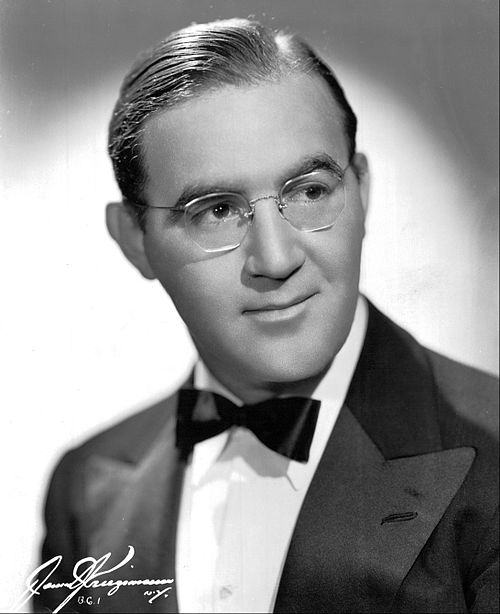
More about Benny Goodman
Sources
- Benny Goodman Wikipedia
- Swing King The New York Review of Books
- The Famous 1938 Carnegie Hall Jazz Concert Wikipedia
Another act of tikkun olam. This is part of tikkun olam, the Jewish idea of repairing the world, and every one of us can add to it.