- Person
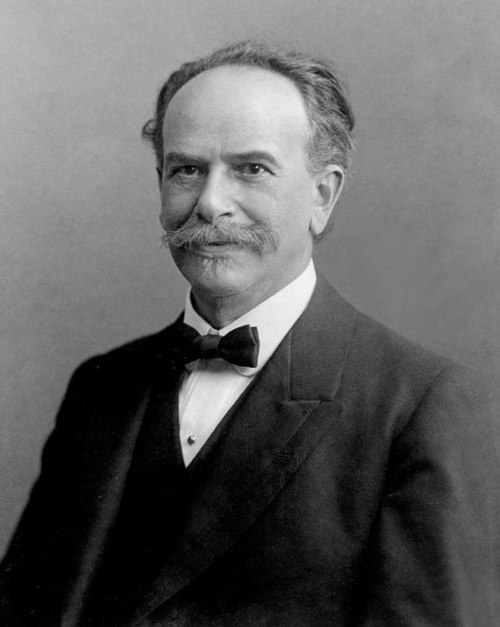
- Franz Boas
- Lived
- 1858–1942
- Field
- Anthropology
- From
- German-American
The story
Franz Boas was born in 1858 in Minden, Prussia, to a Jewish family that embraced Enlightenment values. Trained as a physicist and geographer, he turned to the study of people after fieldwork with the Inuit of Baffin Island in 1883 and 1884, and emigrated to the United States in 1887. He became one of the most prominent opponents of scientific racism, the belief that races were fixed biological types with unequal abilities.
In the early twentieth century, that belief was widespread and shaped public policy, including fears about immigration. In 1908 the Dillingham Commission of the United States Congress asked Boas to study how immigration was affecting American society. He proposed measuring the bodies of immigrants and their children.
His teams worked in immigrant neighbourhoods and at Ellis Island, measuring heads, recording family histories and giving questionnaires. About 17,821 people took part. Head shape was then treated by many scientists as one of the most stable markers of race. Boas found that it was not. Children born in America differed from their parents, and those born soon after their mothers arrived differed from those born later, with head forms shifting toward the American-born norm. The results were published in 1911 as Changes in Bodily Form of Descendants of Immigrants.
The conclusion was powerful. If the features used to define races could change with surroundings in a single generation, then race was not the permanent biological category that racists claimed, and arguments tying race to intelligence or worth lost their footing. Boas argued that human behaviour comes largely from culture, which is learned, rather than from innate biology. In The Mind of Primitive Man, also published in 1911, he challenged claims that Western peoples were racially superior and ended with an appeal for tolerance.
His findings were later disputed, but a 2003 reanalysis of his data largely supported him. Boas kept up the fight all his life, from a 1906 address at Atlanta University citing African achievements to organising scientists against Nazi race theory in the 1930s.
Boas's insistence that cultures cannot be ranked and that human differences are shaped by environment and learning became a foundation of modern anthropology, and of the broader understanding that no group of people is born inferior.
Why it matters
Boas's evidence that 'racial' traits are not fixed helped dismantle the science behind racism, supporting the modern understanding that people of every background share equal human potential.
About Franz Boas
German-Jewish physicist turned anthropologist who founded modern American anthropology, put culture at its centre and used hard evidence to dismantle the scientific racism of his age.
More about Franz Boas
Sources
- Franz Boas Wikipedia
- Genius at Work: How Franz Boas Created the Field of Cultural Anthropology Columbia Magazine
Another act of tikkun olam. This is part of tikkun olam, the Jewish idea of repairing the world, and every one of us can add to it.