- Person
- Franz Boas
- Lived
- 1858–1942
- Field
- Anthropology
- From
- German-American
The story
Franz Boas was born in 1858 in Minden, Prussia, to a Jewish family, and earned a doctorate in physics at Kiel in 1881. A year of fieldwork with the Inuit of Baffin Island in 1883 and 1884, whom he came to see as his teachers, turned him toward the study of human cultures. He moved to the United States in 1887 and joined Columbia University in 1899, where he founded America's first doctoral programme in anthropology.
Boas organised the field around four branches: ethnology, linguistics, archaeology and physical anthropology. His first doctoral student, Alfred Kroeber, finished in 1901 and went on to set up the anthropology department at Berkeley. Others included Robert Lowie, Edward Sapir, Ruth Benedict, Margaret Mead, Melville Herskovits, the writer Zora Neale Hurston and the Dakota scholar Ella Cara Deloria. Through them, his approach spread across American universities.
That approach changed how anthropologists work. Boas argued that cultures develop through their own histories and cannot be ranked against each other. He insisted on understanding ideas on their own terms rather than forcing them into English categories, and he warned that Western assumptions could distort how other languages were heard. Modern anthropologists still share his commitment to long stays in a community, learning the local language and building real relationships with the people they study.
He placed great weight on recording texts: grammars and vocabularies, but also myths, folktales, beliefs and even recipes. He relied on literate Indigenous collaborators, above all George Hunt among the Kwakiutl of British Columbia, and urged his students to treat such people as valued partners. Together Boas and Hunt published several volumes of Kwakiutl Texts. Boas also produced the Handbook of American Indian Languages in 1911 and founded the International Journal of American Linguistics in 1917.
Boas framed some of this as a race to document cultures he feared were disappearing, a view later scholars have examined critically. But the grammars, word lists and recorded stories that he and his collaborators left behind remain an important record of languages and traditions.
Boas died in New York in 1942. The discipline he built, and the habit of listening carefully to people in their own words, continue to shape how the world studies and respects human cultures.
Why it matters
The fieldwork methods Boas taught and the Native language records he helped create still guide anthropologists and remain a resource for Indigenous communities and linguists.
About Franz Boas
German-Jewish physicist turned anthropologist who founded modern American anthropology, put culture at its centre and used hard evidence to dismantle the scientific racism of his age.
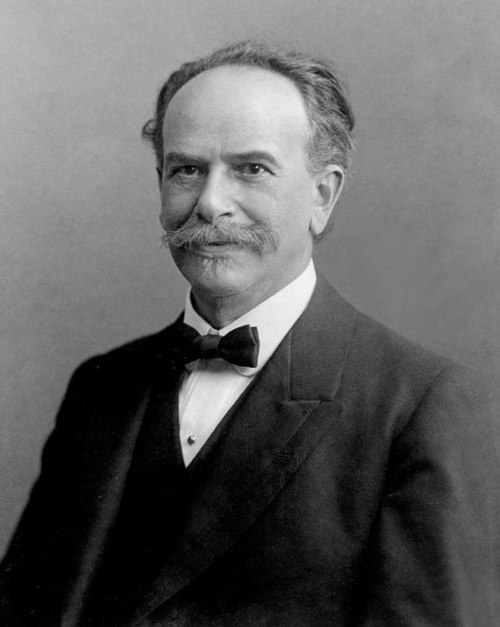
More about Franz Boas
Sources
- Franz Boas Wikipedia
- Genius at Work: How Franz Boas Created the Field of Cultural Anthropology Columbia Magazine
Another act of tikkun olam. This is part of tikkun olam, the Jewish idea of repairing the world, and every one of us can add to it.