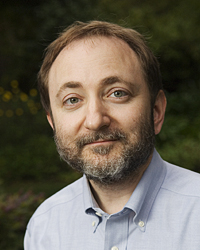
A Silicon Valley childhood
Andrew Zachary Fire was born on April 27, 1959, at Stanford University Hospital in Santa Clara County, California, to Philip and Janet Fire. He spent most of his early years, until he was sixteen, in nearby Sunnyvale, attending the local public schools: Hollenbeck Elementary, Mango Junior High and Fremont High School, which he finished in 1975.
He was precocious in mathematics. He entered the University of California, Berkeley, in the autumn of 1975 and graduated with a degree in mathematics in 1978, at the age of nineteen. Then he made a decisive turn. Instead of continuing in mathematics, he entered the doctoral programme in biology at the Massachusetts Institute of Technology as a National Science Foundation fellow, bringing a mathematician’s precision to the messy world of living cells.
Learning from two great biologists
At MIT Fire worked with the future Nobel laureate Phillip Sharp, studying how genes of adenovirus, a common cold virus, are copied into RNA in the test tube. He completed his PhD in 1983. He then moved to Cambridge, England, as a Helen Hay Whitney Foundation fellow in the group of Sydney Brenner at the Medical Research Council’s Laboratory of Molecular Biology, the birthplace of research on the tiny roundworm Caenorhabditis elegans.
The small, transparent worm had become a favourite animal for studying how genes build a body. In Cambridge Fire improved the technique of microinjecting DNA into the worms and developed ways to test how foreign genes are expressed in them, published in 1986. These tools would make him one of the leading experimental hands in the worm community.
Baltimore and a puzzle about antisense RNA
In November 1986 Fire joined the Department of Embryology of the Carnegie Institution of Washington in Baltimore, Maryland, an independent research post designed to let young scientists start new programmes without teaching duties. He became a regular staff member in 1989 and also an adjunct professor of biology at Johns Hopkins University. His group developed methods to introduce DNA into worms and studied how genes are switched on in muscle cells. With colleagues he assembled large sets of genetic “vectors” for tagging and expressing genes in worms, which his laboratory shared with researchers in 1995 and 1999 and which are still distributed to academic laboratories through the non-profit repository Addgene.
Around 1990, biologists were puzzled by strange results. Plant scientists who added an extra pigment gene to petunias to deepen their colour sometimes got completely white petals instead. Researchers working with worms, among them Fire and Craig Mello, then at Harvard and later at the University of Massachusetts, were trying to block genes with “antisense” RNA, designed to pair with a gene’s messenger RNA, and getting results that were hard to interpret and hard to reproduce.
The discovery of RNA interference
Fire suspected that the culprit was a contaminant: small amounts of double-stranded RNA formed when sense and antisense strands paired up in the injected samples. He and Mello designed a clean test. Injecting purified sense or antisense RNA for a muscle gene had little effect on the worms. Injecting the two strands together, as double-stranded RNA, made the worms twitch in exactly the way worms lacking that muscle protein do. The same happened gene after gene: double-stranded RNA silenced precisely the gene whose code it carried.
The team, which also included SiQun Xu, Mary Montgomery, Stephen Kostas and Samuel Driver, reported in the journal Nature on February 19, 1998, that double-stranded RNA is a potent and specific trigger for silencing genes. Tiny amounts were enough, so they proposed that the process was catalytic, and they showed that the silencing could spread between cells and even pass to offspring. They called it RNA interference, or RNAi. The Nobel committee later said that their discovery clarified many confusing and contradictory observations and revealed a natural mechanism for controlling the flow of genetic information.
What made the 1998 paper so convincing was its simplicity and its numbers. Double-stranded RNA proved far more effective at silencing a gene than either single strand alone, and so few molecules were needed that Fire and Mello concluded the cell must be amplifying or recycling the signal, a hypothesis that later research confirmed. The silencing was exquisitely specific: only the gene whose sequence matched the injected RNA was affected, so researchers could aim it precisely.
The field’s response was immediate. Nick Hastie, director of the British Medical Research Council’s Human Genetics Unit, told the BBC that it was very unusual for a piece of work to completely revolutionise the whole way we think about biological processes and regulation, but that this had opened up a whole new field in biology. Fire and the Carnegie Institution also patented the use of double-stranded RNA to inhibit genes. Before the Nobel Prize, the discovery brought Fire and Mello a string of awards, including the Meyenburg Prize, the Rosenstiel Award, the Massry Prize and the Paul Ehrlich and Ludwig Darmstaedter Prize.
A switch inside every cell
Within a few years other laboratories identified the cell’s machinery for RNA interference: an enzyme called Dicer cuts double-stranded RNA into short pieces, and a complex called RISC uses each piece as a guide to find and destroy matching messenger RNA. RNAi turned out to exist in plants, animals and humans. It defends cells against viruses and jumping genes, and through hundreds of natural microRNAs it helps regulate our own genes during development and throughout life.
It also gave scientists a simple way to turn off any gene they choose. By designing a short double-stranded RNA matching a gene, researchers can silence it and see what happens, in worms, flies, plants, mice or human cells grown in the laboratory. RNAi quickly became one of the standard tools of biology and medicine, used in laboratories everywhere to find out what genes do and which ones drive disease.
From worms to medicines
The hope of turning RNAi into treatments took two decades to realise, largely because of the difficulty of delivering fragile RNA molecules to the right tissues. In August 2018 the U.S. Food and Drug Administration approved patisiran (Onpattro), the first RNA interference medicine, for nerve damage caused by hereditary transthyretin amyloidosis, a rare inherited disease in which a misfolded liver protein damages the nerves. The drug silences the gene for that protein at its source.
Others have followed, and in December 2021 the FDA approved inclisiran (Leqvio), a small interfering RNA that lowers “bad” LDL cholesterol in people with heart disease or inherited high cholesterol with just two maintenance injections a year. Medicines that work by silencing a disease-causing gene, an idea that did not exist before 1998, are now part of everyday clinical practice, and many more are in development.
Stanford and the Nobel Prize
In 2003 Fire returned to the place where he was born, joining Stanford University School of Medicine, where he is Professor of Pathology and Genetics. His laboratory continues to study how cells recognise and respond to foreign or unusual genetic material, and how organisms adapt to changes in their environment. Throughout his career his research has been supported by grants from the U.S. National Institutes of Health.
Recognition came quickly. Fire and Mello shared the National Academy of Sciences Award in Molecular Biology and the Wiley Prize in 2003 and the Gairdner International Award in 2005, and Fire was elected to the National Academy of Sciences in 2004. In October 2006 the Nobel Assembly awarded the two men the Nobel Prize in Physiology or Medicine for their discovery of RNA interference, gene silencing by double-stranded RNA. Fire was 47; it was just eight years after their paper appeared. He is also a member of the American Academy of Arts and Sciences and has served on a board of scientific counselors at the National Institutes of Health, helping to guide the federal research that funded his own work.
Jewish background and character
Fire was raised in a Jewish family in Sunnyvale. His mother, Janet Fire (née Sherak), was the daughter of Russian Jewish immigrants, and his father, Philip Fire, had been president of the Massachusetts Institute of Technology chapter of the Jewish fraternity Alpha Epsilon Pi in 1951. Fire has said little in public about religious practice.
He has tended to present the discovery as the work of a community. His Nobel lecture was titled simply Gene Silencing by Double-Stranded RNA, and the biography he supplied to the Nobel Foundation is a modest list of schools, fellowships and posts. Asked about his honours, he has stressed that he is part of a larger community of scientists working together, and his laboratory’s practice of sharing its tools with colleagues reflects that spirit.
Legacy
Andrew Fire’s contribution was to see the simple explanation behind a confusing set of results, and to prove it with a clean, elegant experiment on a millimetre-long worm. RNA interference changed how biologists understand gene regulation, gave every laboratory a way to switch genes off at will, and opened a new class of medicines that silence the genes behind disease.
For patients with rare inherited diseases that once had no treatment, and for people with heart disease and stubbornly high cholesterol, that discovery now arrives as a few injections a year. Few findings have travelled so quickly, or so far, from a worm in a Baltimore laboratory to the doctor’s office.
Sources & further reading
Andrew Z. Fire, Biographical, NobelPrize.org · Press release: The Nobel Prize in Physiology or Medicine 2006, NobelPrize.org · Andrew Zachary Fire (1959– ), Embryo Project Encyclopedia, Arizona State University · FDA approves Novartis Leqvio (inclisiran), Novartis media release, December 22, 2021 · Jewish Nobel Prize Winners in Medicine, JINFO.ORG · Andrew Fire, Wikipedia · Researched from the sources above and checked against them. Spotted an error? Tell us.
A life of tikkun olam. This is part of tikkun olam, the Jewish idea of repairing the world, and every one of us can add to it.