- Person
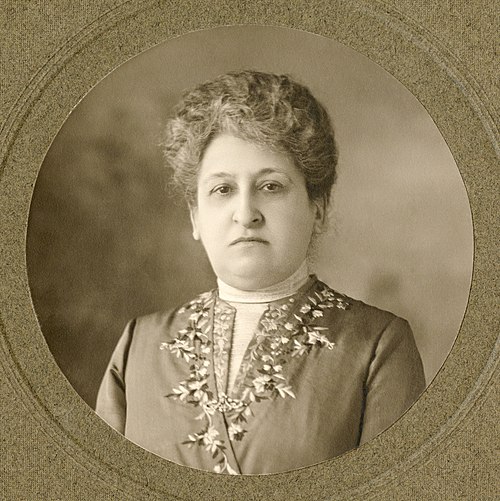
- Aletta Jacobs
- Lived
- 1854–1929
- Field
- Medicine, women’s rights
- From
- Dutch
The story
Aletta Jacobs, born in 1854 into an assimilated Jewish family in the Dutch town of Sappemeer, became in 1879 the first Dutch woman to earn a medical degree. She opened a practice in Amsterdam, where, because women doctors could not then treat men, her patients were women and children.
She was shocked by what she saw among the poor. Twice a week she ran free clinics where working-class women could get medical care and advice on hygiene and childcare. She saw how year after year of pregnancies exhausted mothers and contributed to high infant mortality, and she became convinced that reliable contraception would relieve both suffering and poverty.
After corresponding with the German physician Wilhelm Mensinga about his diaphragm, she tried it with a range of her patients and found it worked. In 1882 she began handing out birth control information and diaphragms, free of charge, at her clinics for the poor. It was the first birth control clinic in the Netherlands and is widely described as the first in the world devoted to contraceptive advice. The Netherlands was then the only European country where giving out such information was not illegal. Unlike earlier advocates, who addressed the middle class, Jacobs aimed her help at the poorest women.
Many of her fellow doctors were outraged, arguing that contraception defied the divine plan and encouraged immorality. Jacobs kept going. Similar clinics opened in other Dutch cities, and her work came more than three decades before the first clinics of Margaret Sanger in the United States and Marie Stopes in Britain; later campaigners, Sanger among them, drew on her example. She also wrote a popular illustrated guide to women’s bodies and reproductive systems, published in 1897 and reprinted six times.
Jacobs later counted making motherhood a question of desire rather than duty among the three great aims of her life.
Why it matters
Contraceptive advice from a doctor, now a routine part of health care worldwide, began as a free service Jacobs offered poor women in Amsterdam.
About Aletta Jacobs
First woman to study at a Dutch university and the Netherlands’ first woman doctor, who gave poor women free care, opened a pioneering birth control clinic and led the fight for women’s votes.
More about Aletta Jacobs
Sources
- Aletta Henriette Jacobs Jewish Women’s Archive
- First Birth Control Clinic Opens in Amsterdam EBSCO Research Starters
- Aletta Jacobs Wikipedia
Another act of tikkun olam. This is part of tikkun olam, the Jewish idea of repairing the world, and every one of us can add to it.